

INVASIVE CANDIDIASIS AND THE REALQUALITY CANDIDA PLUS SOLUTION
Invasive candidiasis is a serious problem, especially in immunocompromised patients. This article provides an overview of Candida, its mechanisms of infection, current diagnostic methods, and an effective treatment solution with the REALQUALITY CANDIDA PLUS kit.
WHAT IS CANDIDA?
Candida is a genus of yeasts that commonly live as commensals on humans and are found on the skin and on the mucous membranes of the oral cavity, the gastrointestinal tract, and the genitourinary tract. There are about >200 Candida species, of which only about 10% can cause disease in humans.
Candida lives commensally at low levels on the skin and in the intestinal tract of 50-70% of healthy people. In some situations, Candida overgrows, leading to disease. Diseases caused by Candida are usually classified by the site where they are detected:
- - Vaginal candidiasis
- - Cutaneous candidiasis (armpits, breasts, groin area)
- - Oral thrush due to Candida infection of the mouth
- - Candida infection of the fingernails and toenails
- - Invasive candidiasis
WHAT IS INVASIVE CANDIDIASIS?
Invasive candidiasis occurs when Candida moves from the intestinal tract into the blood and other sterile sites in the body.
Candida bloodstream infection (candidaemia) can progress to secondary fungal infection of deep organs (deep-seated candidiasis) such as the lungs, liver, heart, eyes, brain, bones, ...
C. albicans, C. glabrata, C. krusei, C. tropicalis, and C. parapsilosis are the 5 most common pathogenic species, causing 90% of invasive candidiasis cases. Of these, C. albicans is the most common species, accounting for more than 50% of infections. More recently, C. auris has emerged as a new pathogen causing invasive candidiasis worldwide (Figure 1) ⁴.
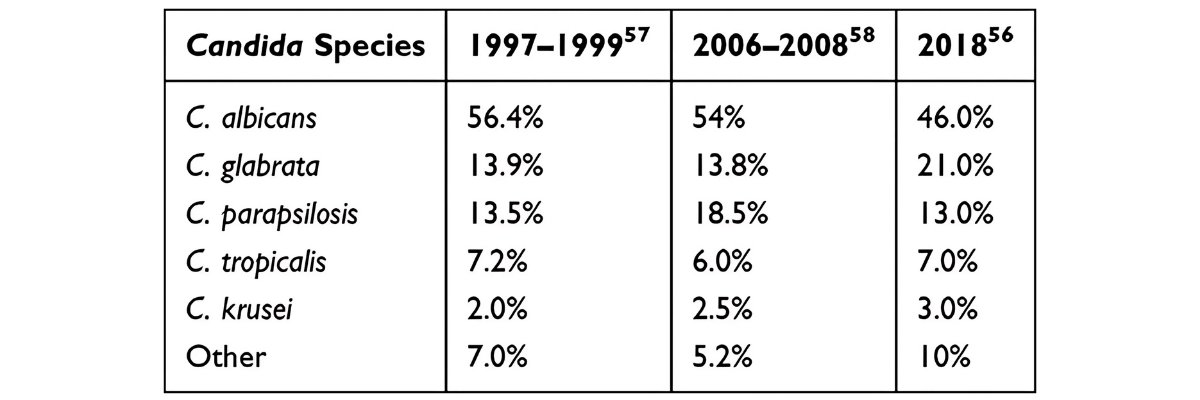
Figure 1: Proportions of pathogenic Candida species in three different time periods, according to the European Confederation of Medical Mycology ³.
INVASIVE CANDIDIASIS - A CONCERNING ISSUE
Worldwide, there are about 750,000 cases of invasive candidiasis each year, an incidence of 3-5 cases per 100,000 people. More than 70% of these cases come from intensive care units (ICU) (60%) and oncology and transplant departments (13%). Candida causes 17% of ICU infections in patients with positive blood cultures ⁸.
In Vietnam, there is still limited information on invasive candidiasis. One study estimated the incidence of Candida bloodstream infection at 12 cases per 100,000 people in 2020, quite high compared with the global incidence ⁷. The first cases of C. auris infection have also now been recorded at Cho Ray Hospital ⁶.
Because of the high mortality rate (40-55%) and atypical clinical symptoms, the diagnosis and detection of invasive candidiasis always deserve attention.
CURRENT DIAGNOSTIC METHODS
Culture Method
Culture is still considered the gold standard for diagnosing invasive candidiasis, especially Candida bloodstream infection. Culture can give positive results for samples from 1 CFU/mL. However, culture has 2 major drawbacks:
- - Low yield: Blood culture successfully isolates Candida in only 21-71% of patients with Candida infection, particularly in deep-seated infections.
- - Long turnaround time of 2-4 days, sometimes up to 8 days.
To overcome the problem of low sensitivity, blood cultures need to be performed frequently and with a sufficiently large blood volume.
Despite these difficulties, culture will remain an important method for many years to come because it enables downstream identification and susceptibility testing.
Immunological Methods
Immunological methods are usually based on detecting antigens or antibodies in the patient's serum. The target antigens are usually cell wall components such as mannan or β-D-Glucan.
Because antigens such as β-D-Glucan are not present in humans or bacteria, the β-D-Glucan test has a high negative predictive value, helping to quickly rule out cases that are not invasive candidiasis. However, the β-D-Glucan test does not help rule out other fungal infections such as Aspergillus spp. or Pneumocystis jirovecii.
PCR Amplification Method
PCR testing is a non-culture-based method, so it allows rapid detection of invasive candidiasis, which is a cause of sepsis. One study showed that both sensitivity and specificity exceeded 90% when PCR was performed on whole blood samples ⁷.
Some current testing solutions for invasive candidiasis also allow identification of the important species, including: C. albicans, C. glabrata, C. krusei, C. tropicalis, C. parapsilosis, and C. auris. This allows more precise drug selection, especially for species that are often multidrug-resistant, such as C. glabrata or C. auris.
However, invasive candidiasis is not limited to Candida bloodstream infection but also includes deep-seated infection. It is still unclear whether testing whole blood samples can detect free Candida DNA in deep-seated infections without bloodstream infection. This is one barrier that has prevented PCR from gaining wide acceptance ⁹.
COMBINING DIAGNOSTIC METHODS IN TREATMENT
Currently, drugs for treating Candida infection fall into 3 main classes: polyenes, azoles, and echinocandins. In addition, flucytosine is used as adjunctive treatment for central nervous system Candida infections and Candida endocarditis.
For effective treatment, identification and susceptibility testing results are extremely important. However, obtaining results by culture usually takes a long time (2-4 days), while treatment cannot be delayed.
Therefore, in practice, other factors must be involved, including a predictive scoring system (Candida score) and non-culture tests such as β-D-Glucan or PCR, which are used to provide information that supports the choice of an appropriate treatment regimen (Figure 2).
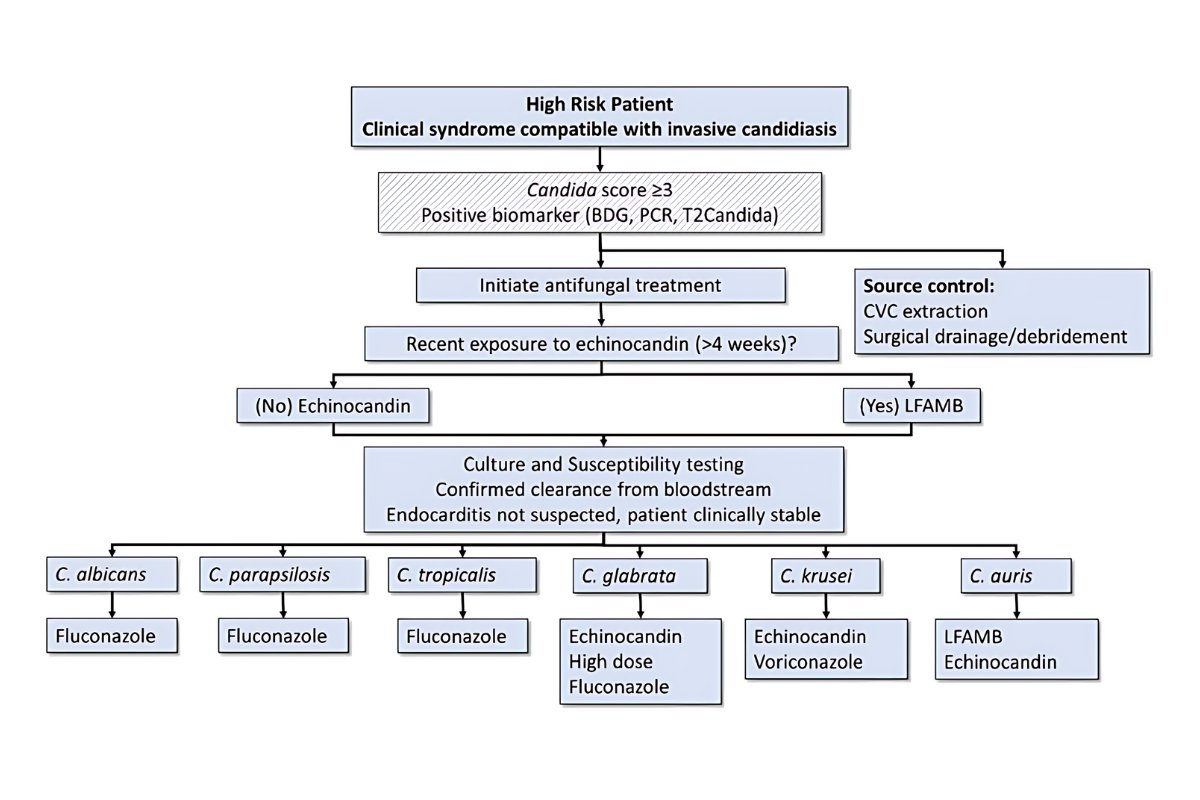
Figure 2: Treatment algorithm for patients from suspected to confirmed invasive candidiasis ³.
THE REALQUALITY CANDIDA PLUS SOLUTION
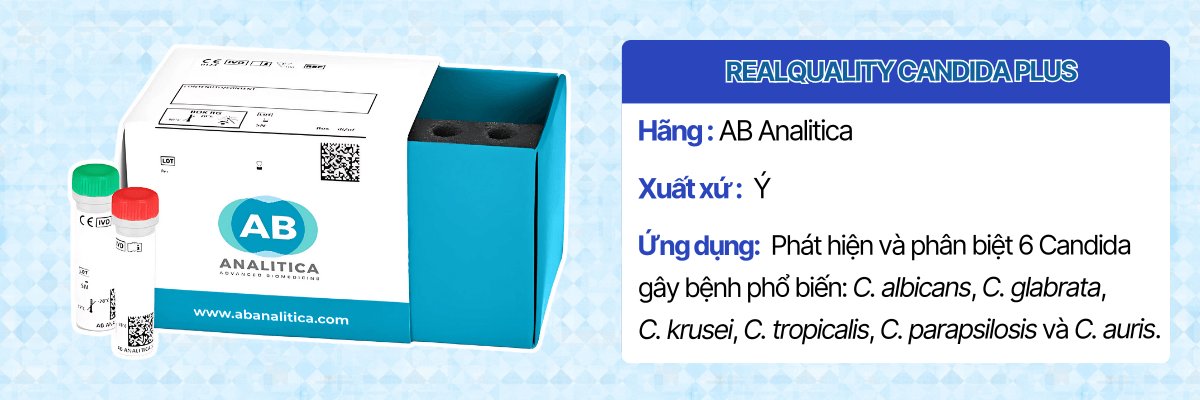
REALQUALITY CANDIDA PLUS is a real-time PCR kit from AB ANALITICA (Italy) that enables rapid detection and differentiation of the 6 most common species causing invasive candidiasis, including: C. albicans, C. glabrata, C. krusei, C. tropicalis, C. parapsilosis and C. auris.
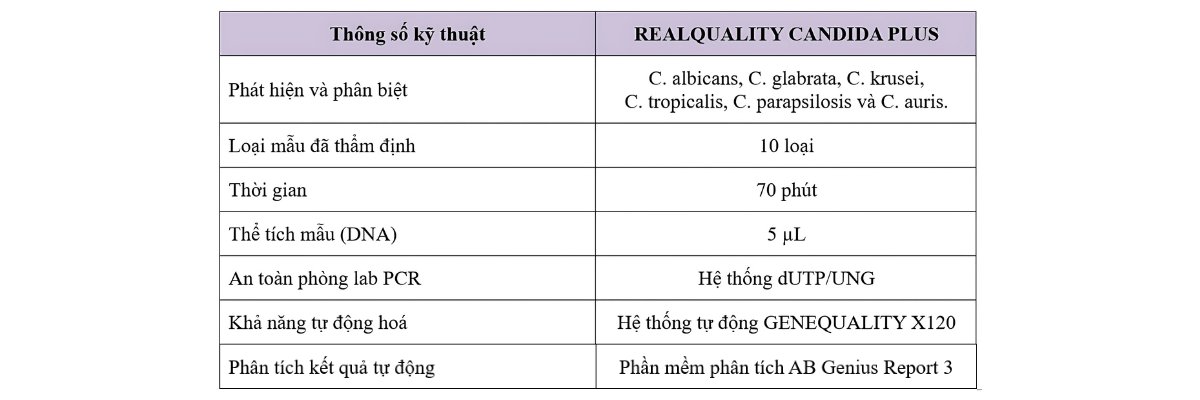
REALQUALITY CANDIDA PLUS has been validated on 10 different sample types: cervicovaginal swabs, urethral swabs, EDTA blood, serum, plasma, blood cultures, rectal swabs, stool, axillary skin swabs, and inguinal skin swabs. As a result, the kit is suitable for testing a wide range of Candida-related conditions.
Other advantages of the kit:
- - A dUTP/UNG system in the master mix decontaminates residual PCR products from previous PCR runs and makes it easier to resolve contamination incidents in the PCR laboratory.
- - An automated version is available on the GENEQUALITY 120 system (AB analitica, Italy)
- - AB Genius Report 3 result analysis software saves analysis time.
In summary, the key features of the kit:
REFERENCES
- 1. AB ANALITICA. (2024). REALQUALITY Candida Plus brochure. Retrieved from https://www.abanalitica.com/en/prodotto/realquality-candida-plus-en/.
- 2. AB ANALITICA. (2023). REALQUALITY Candida Plus user manual (Code RQ-174). Retrieved from https://www.abanalitica.com.
- 3. Bays, D. J., Jenkins, E. N., Lyman, M., Chiller, T., Strong, N., Ostrosky-Zeichner, L., ... & Thompson III, G. R. (2024). Epidemiology of Invasive Candidiasis. Clinical Epidemiology, 549-566.
- 4. Barantsevich, N., & Barantsevich, E. (2022). Diagnosis and treatment of invasive candidiasis. Antibiotics, 11(6), 718.
- 5. Ben-Ami, R. (2018). Treatment of invasive candidiasis: A narrative review. Journal of Fungi, 4(3), 97.
- 6. Dang-Vu, T., Lam-Quoc, D., Duong-Minh, N., Vu, H., Nguyen-Ho, L., Truong-Thien, P., & Nguyen-Dang, K. (2024). The first report of Candida auris infection in Vietnam. European journal of case reports in internal medicine, 11(3).
- 7. Duong, T. M. N., Le, M. H., Beardsley, J., Denning, D. W., Le, N. H., & Nguyen, B. N. T. (2023). Updated estimation of the burden of fungal disease in Vietnam. Mycoses, 66(4), 346-353.
- 8. Soriano, A., Honore, P. M., Puerta-Alcalde, P., Garcia-Vidal, C., Pagotto, A., Gonçalves-Bradley, D. C., & Verweij, P. E. (2023). Invasive candidiasis: current clinical challenges and unmet needs in adult populations. Journal of Antimicrobial Chemotherapy, 78(7), 1569-1585.
- 9. White, P. L., Price, J. S., Cordey, A., & Backx, M. (2021). Molecular diagnosis of yeast infections. Current Fungal Infection Reports, 15(3), 67-80.
Related Articles

Multigene testing solution (ALK, ROS1, RET, MET) for non-small cell lung cancer (NSCLC)
Lung Cancer RNA Panel is an advanced multigene test kit that enables simultaneous detection of key mutations such as ALK, ROS1, RET, and MET in NSCLC. With an integrated quality control tool (IQCA), the kit...

HMPV: Current Situation and Control Solutions
Currently, the rising number of human metapneumovirus (HMPV) infections is causing alarm in many countries around the world. With its ability to spread widely in winter and early spring, HMPV has become a major...
THE ROLE OF PIK3CA MUTATIONS IN VARIOUS CANCERS
PIK3CA gene mutations play an important role in many cancers, including breast, endometrial, bladder, and colorectal cancers, as well as head and neck squamous cell carcinoma. This article discusses...
Need Advice on the Right Testing Solution?
Viet Huy engineers are ready to help your laboratory choose the optimal technology.