
INTRODUCTION TO HERPES SIMPLEX VIRUS (HSV) 1 AND 2
Herpes simplex virus (HSV) type 1 and type 2 commonly cause recurrent infections affecting the skin, mouth, lips, eyes, and genitals. HSV is highly contagious; therefore, it is necessary to avoid contact, kissing, or unprotected sex with infected people to prevent transmission.
Herpes Simplex Virus 1 and 2
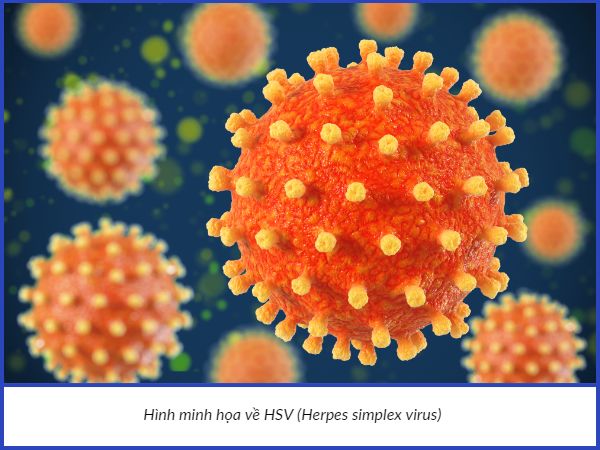
Herpes simplex virus (HSV) is spherical, with an average size of 185 nm. The envelope of the virus particle is formed by a lipid bilayer with outer spikes made of glycoproteins, so the overall size of HSV reaches up to 225 nm. The synthesis of essential proteins is directed by a double-stranded DNA genome of 152 Kbp.
HSV has 2 types: HSV-1 and HSV-2. For HSV-1, the main route of transmission is contact with blisters, saliva, or surfaces in or around the mouth. HSV-1 was previously thought to cause only oral herpes; however, (although less commonly) HSV-1 can also infect the genitals through oral-genital contact. In addition, HSV-1 can be transmitted even when the skin surface looks normal, but infectivity is highest when blisters appear on the skin. HSV-2 is mainly transmitted through sexual contact. Like HSV-1, HSV-2 can be transmitted from the genitals to the mouth (rarely) and can be transmitted even in the absence of signs of disease. Besides the above routes of transmission, HSV can also be transmitted from mother to child (rarely) during labor and delivery: newborns usually become infected during vaginal delivery (this is the main route of Herpes virus infection in newborns).
Because it is so easily transmitted, the proportion of people infected with HSV-1 and HSV-2 is very high. According to WHO (World Health Organization) estimates, in 2016 nearly 3.7 billion people under 50 years of age (67%) carried HSV-1. Genital herpes caused by HSV-2 affects about 491 million people (13%) aged 15 to 49. In addition, HSV-2 infection is twice as common in women as in men because transmission from men to women is more efficient [5].
Symptoms of HSV-1 and HSV-2 Infection
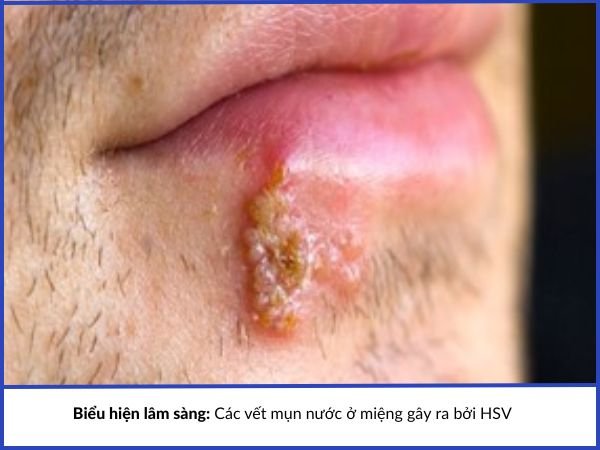
In general, Herpes virus infection is usually asymptomatic or causes only mild symptoms. Normally, both HSV-1 and HSV-2 remain inactive in the human body; however, under favorable conditions they multiply and cause disease. When the disease develops, HSV-1 usually causes oral herpes, typically cold sores (blisters) around the mouth, while HSV-2 mainly causes genital herpes.
However, HSV infection can also cause severe complications such as central nervous system infection and multi-organ infection. For example, encephalitis caused by Herpes Simplex (HSE) is a common cause of fatal sporadic encephalitis in developed countries [1]. According to one statistic, the incidence of HSE in the United States is 1:250,000 people per year [2]. If patients with HSE are not treated, the mortality rate can reach 70% [4]. For newborns with HSV infection who are not treated promptly, the mortality rate is about 80% [3]; even if newborns are successfully treated, serious sequelae may remain, such as cerebral palsy, intellectual disability, epilepsy, vision loss, hearing loss, etc.
So, patients should be tested for HSV when:
+ The patient has symptoms of herpes, such as blisters or sores on the genitals or other parts of the body.
+ The patient's sexual partner has been infected with the Herpes virus.
+ The patient is pregnant, and the patient or the patient's sexual partner has been infected with Herpes or has symptoms of genital herpes. If a pregnant woman tests positive for the Herpes virus, her newborn may also need to be tested.
Currently Available Tests for Detecting HSV-1 and HSV-2
In Vietnam, HSV-1 and HSV-2 can be identified by many different methods, such as ELISA, direct immunofluorescence assay, direct viral culture, and Real-Time PCR (qPCR). Each method has a different sensitivity and specificity.
In addition, guideline No. 5183/QD-BYT of the Ministry of Health (MOH), "On the Promulgation of Guidelines for the Diagnosis and Treatment of Genital Herpes Simplex Infection", mentions in section 2.2 Paraclinical Tests the advantages of qPCR over direct viral culture as follows: "Nucleic Acid Amplification Tests (NAATs, including PCR tests for HSV-1 and HSV-2): compared with viral culture, NAATs have higher sensitivity, specimens are easier to collect and transport, and results are available faster, so they are increasingly preferred.".
Detecting HSV-1 and HSV-2 by qPCR
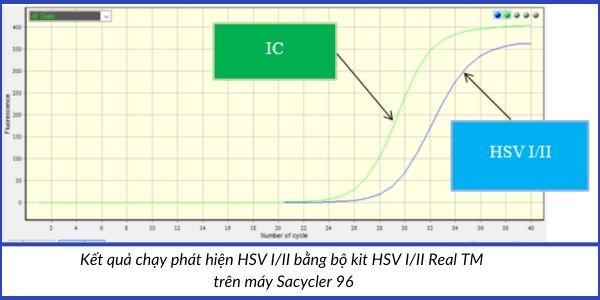
The Real-Time PCR (qPCR) technique allows HSV-1 and HSV-2 to be detected directly in samples. This method uses the same principle as conventional PCR. Accordingly, the target DNA fragments of HSV-1 and HSV-2 are amplified with specific primers. At the same time, the PCR products are detected by specific fluorescently labeled probes. The fluorescence signal intensity accumulates over the thermal cycles and is read by the Real-Time PCR system in the corresponding detection channel.
The qPCR method offers outstanding advantages in terms of speed, convenience, and sensitivity. For example, the HSV I/II Real TM kit from Sacace - Italy, which meets the CE-IVD standard, uses qPCR for detection in a wide range of clinical sample types such as whole blood, cerebrospinal fluid, tissue, prostatic fluid, semen, and swabs from the cervix, urethra, or conjunctiva. With the HSV I/II Real TM kit, result interpretation is simple, using only two detection channels: the FAM (Green) channel for HSV I/II and the JOE (Yellow)/HEX/Cy3 channel for the IC (internal control). The kit can detect HSV I/II with a sensitivity of 5*102 GE/ml.
References
- Danny L. Wiedbrauk, 2010. "Chapter 37: Herpes Simplex Virus". Molecular Diagnostics: Techniques and Applications for the Clinical Laboratory, Academic Press, pp. 453- 460. DOI: 10.1016/B978-0-12-369428-7.00037-9.
- David W. Kimberlin, et al., 2006. Diagnosis Of Herpes Simplex Virus In The Era Of Polymerase Chain Reaction. Concise Review of Pediatric Infectious Diseases, Vol 24, No 9, pp: 841- 842. DOI: 10.1097/01.inf.0000234070.86385.b6.
- David W, Kimberlin, et al., 2006. Herpes Simplex Virus, Meningitis, And Encephalitis In Neonates. Herpes.11, pp 65A- 76A.
- Richard J. Whitley, et al., 1977. Adenine Arabinoside Therapy Of Biopsy-Proved Herpes Simplex Encephalitis. The new England Journal of Medicine, Vol 297, No 6, pp 289- 294. DOI: 10.1056/NEJM197708112970601
- World Health Organization, 2023. Herpes simplex virus. https://www.who.int/news-room/fact-sheets/detail/herpes-simplex-virus
Related Articles

Multigene testing solution (ALK, ROS1, RET, MET) for non-small cell lung cancer (NSCLC)
Lung Cancer RNA Panel is an advanced multigene test kit that enables simultaneous detection of key mutations such as ALK, ROS1, RET, and MET in NSCLC. With an integrated quality control tool (IQCA), the kit...
HMPV: Current Situation and Control Solutions
Currently, the rising number of human metapneumovirus (HMPV) infections is causing alarm in many countries around the world. With its ability to spread widely in winter and early spring, HMPV has become a major...
THE ROLE OF PIK3CA MUTATIONS IN VARIOUS CANCERS
PIK3CA gene mutations play an important role in many cancers, including breast, endometrial, bladder, and colorectal cancers, as well as head and neck squamous cell carcinoma. This article discusses...
Need Advice on the Right Testing Solution?
Viet Huy engineers are ready to help your laboratory choose the optimal technology.