
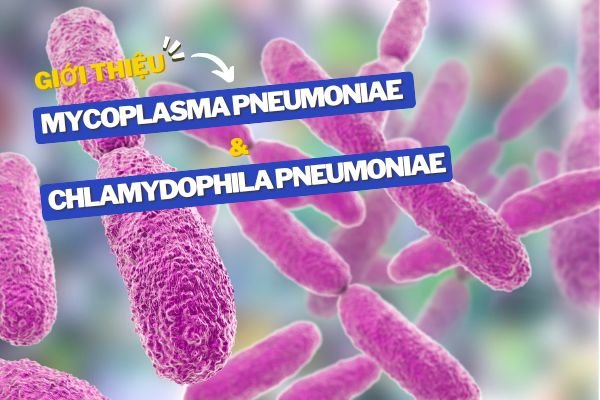
Introduction to Mycoplasma pneumoniae and Chlamydophila pneumoniae
Mycoplasma pneumoniae and Chlamydophila pneumoniae are the two main causative agents of community-acquired atypical pneumonia, which mostly occurs in young children. These two bacteria are mainly transmitted through droplets when an infected person sneezes or coughs. Therefore, they can easily spread to healthy people in group settings ...
Overview of the Bacteria Mycoplasma pneumoniae and Chlamydophila pneumoniae:
The Bacterium Mycoplasma pneumoniae:
Mycoplasma belongs to the class Mollicutes and is the smallest bacterium (0.15-0.3 µm) capable of living independently in nature. There are more than 120 Mycoplasma species, but only 13 species have been isolated from humans, and 4 of these are known to cause disease in humans. The most distinctive difference between Mycoplasma and other bacteria is the lack of a cell wall; therefore, these bacteria are not affected by beta-lactam antibiotics. Mycoplasma pneumoniae has an affinity for the respiratory mucosa, so it often resides there as a non-pathogenic commensal. However, under favorable conditions, it can proliferate and cause disease.

Illustration of the bacterium Mycoplasma pneumoniae
The Bacterium Chlamydophila pneumoniae :
The bacterium Chlamydophila (also known as Chlamydia) pneumoniae belongs to the genus Chlamydia and is an obligate intracellular bacterium because it needs to use the adenosine triphosphate (ATP) of the host cell to grow and develop.
Chlamydia pneumoniae is a small gram-negative bacterium measuring 0.2-1 µm.

Illustration of the bacterium Chlamydia pneumoniae
Pneumonia Caused by Mycoplasma pneumoniae and Chlamydia pneumoniae :
Pneumonia Caused by Mycoplasma pneumoniae :
Mycoplasma pneumoniae is the main cause of community-acquired atypical pneumonia in adults under 40 years of age (15-20% of all pneumonia cases)5 and in children over 5 years of age (up to 40% in children, accounting for up to 18% of hospital admissions for treatment)7. The incubation period is usually two to three weeks; after that, according to the US CDC, patients may develop the following symptoms:
-
Adults and children over 5 years of age: the most common symptom is tracheobronchitis; other symptoms include sore throat, fatigue, fever, and a persistent cough lasting from weeks to months.
-
Children under 5 years of age have symptoms different from those of older children and adults: sneezing, stuffy or runny nose, sore throat, watery eyes, vomiting, and diarrhea.
-
Common symptoms of pneumonia are fever and chills, cough, fatigue, and shortness of breath.
Although Mycoplasma pneumoniae infection is not life-threatening, it can lead to severe conditions, especially in children and the elderly, such as: acute respiratory distress syndrome (ARDS), pleural effusion - occurring in about 20-25% of patients with pneumonia caused by Mycoplasma pneumoniae1, lung abscess,
Pneumonia Caused by Chlamydia pneumoniae
About 70% of respiratory infections caused by Chlamydia pneumoniae are asymptomatic or mildly symptomatic, but the remaining 30% or so cause community-acquired pneumonia (CAP) with atypical symptoms, upper and lower respiratory tract infections, and bronchitis. Chlamydia pneumoniae is one of the main agents associated with community-acquired pneumonia (accounting for 6-20% of CAP cases).2 The bacterium Chlamydia pneumoniae is associated not only with respiratory diseases but also with several other conditions such as asthma, or neurological disorders such as Alzheimer's disease, ...
The clinical symptoms of pneumonia caused by Chlamydia pneumoniae and Mycoplasma pneumoniae cannot be distinguished because they are similar.3 Therefore, laboratory tests are required to detect disease caused by Chlamydia pneumoniae or by Mycoplasma pneumoniae. According to a study based on antibody testing, up to 50% of people aged 20 tested positive and up to 80% of people aged 60 to 70 tested positive4; infected people usually have no symptoms at all, and a person can be infected and reinfected throughout their life. In addition, the results also showed that above the age of 15 the infection rate is higher in males than in females; however, under the age of 15 the infection rate is the same in both sexes.6
® The two bacteria Mycoplasma pneumoniae and Chlamydia pneumoniae usually do not cause life-threatening disease; however, if they are not detected and treated properly, they can cause dangerous complications (especially in young children, the elderly, and immunocompromised patients) and can spread widely in the community. Therefore, you should see a doctor at a reputable healthcare facility as soon as any unusual symptoms appear.
Currently Available Tests for Detecting Mycoplasma pneumoniae and Chlamydia pneumoniae :
In Vietnam, testing to identify Mycoplasma pneumoniae and Chlamydia pneumoniae can be performed with many different methods, such as the complement fixation test (CF test), ELISA, direct bacterial culture, and Real-time PCR (qPCR). Each method has a different sensitivity and specificity.
Detecting Mycoplasma pneumoniae and Chlamydia pneumoniae by qPCR:
Detection using the Real-time PCR (qPCR) technique allows Mycoplasma pneumoniae and Chlamydia pneumoniae to be detected directly in samples. This method uses the same principle as conventional PCR. Accordingly, the target DNA fragments of Mycoplasma pneumoniae and Chlamydia pneumoniae are amplified with specific primers. At the same time, the PCR products are detected by specific fluorescently labeled probes. The fluorescence signal intensity accumulates over the thermal cycles and is read by the Real-time PCR system in the corresponding detection channel.
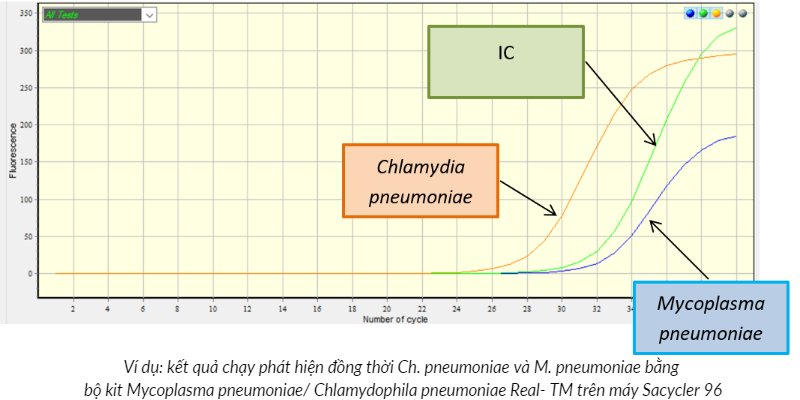
The qPCR method offers outstanding advantages in terms of speed, convenience, and sensitivity. For example, the Mycoplasma pneumoniae/ Chlamydophila pneumoniae Real-TM kit from Sacace - Italy, which meets the CE-IVD standard, uses multiplex qPCR to enable detection of the presence of Mycoplasma pneumoniae and Chlamydia pneumoniae in a single run with a wide range of clinical sample types such as whole blood, autopsy (tissue) samples, throat washes, sputum and tracheal fluid samples, and swabs. With the Mycoplasma pneumoniae/ Chlamydophila pneumoniae Real-TM kit, result interpretation is simple, using only three detection channels: the FAM (Green) channel for Mycoplasma pneumoniae, the ROX (Orange) channel for Chlamydia pneumoniae, and finally the JOE (Yellow)/HEX/Cy3 channel for the IC (internal control DNA). The kit can detect Mycoplasma pneumoniae and Chlamydia pneumoniae with a sensitivity of 5*102 GE/ml.
References:
1. Chang Ho Kim, et al. (2022). Mycoplasma pneumoniae Pleural Effusion in Adults. J Clin Med, 11: 1281. DOI: 10.3390/jcm11051281.
2. Hammerschlag MR. (2000). Chlamydia pneumoniae and the lung. ERS journal, 16: 1001- 1007. DOI: 10.1183/09031936.00.16510010.
3. Ha Thi Thanh Van, et al. (2021). Clinical and paraclinical characteristics of Chlamydia pneumoniae and Mycoplasma pneumoniae pneumonia in children at the Vietnam National Children's Hospital [In Vietnamese]. Vietnam Medical Journal, 506: 233-237.
4. Porritt RA, et al. (2016). Chlamydia pneumoniae Infection and Inflammatory Diseases. For Immunopathol Dis Therap, 7(3-4):237-254. DOI: 10.1615/ForumImmunDisTher.2017020161.
5. Rebecca J.Brown, et al. (2016). Mycoplasma pneumoniae Epidemiology in England and Wales: A National Perspective. Front Microbiol, 7:157. DOI: 10.3389/fmicb.2016.00157.
6. Theunissen HJ, et al. (1993). Influence of temperature and relative humidity on the survival of Chlamydia pneumoniae in aerosols. Appl Environ Microbiol, 59(8), 2589-93. DOI: 10.1128/aem.59.8.2589-2593.1993
7. Waites K, et al. (2004). Mycoplasma pneumoniae and Its Role as a Human Pathogen. Clinical Microbiology Review, 17(4): 697- 728. DOI: 10.1128/CMR.17.4.697-728.2004.
Related Articles

Multigene testing solution (ALK, ROS1, RET, MET) for non-small cell lung cancer (NSCLC)
Lung Cancer RNA Panel is an advanced multigene test kit that enables simultaneous detection of key mutations such as ALK, ROS1, RET, and MET in NSCLC. With an integrated quality control tool (IQCA), the kit...
HMPV: Current Situation and Control Solutions
Currently, the rising number of human metapneumovirus (HMPV) infections is causing alarm in many countries around the world. With its ability to spread widely in winter and early spring, HMPV has become a major...
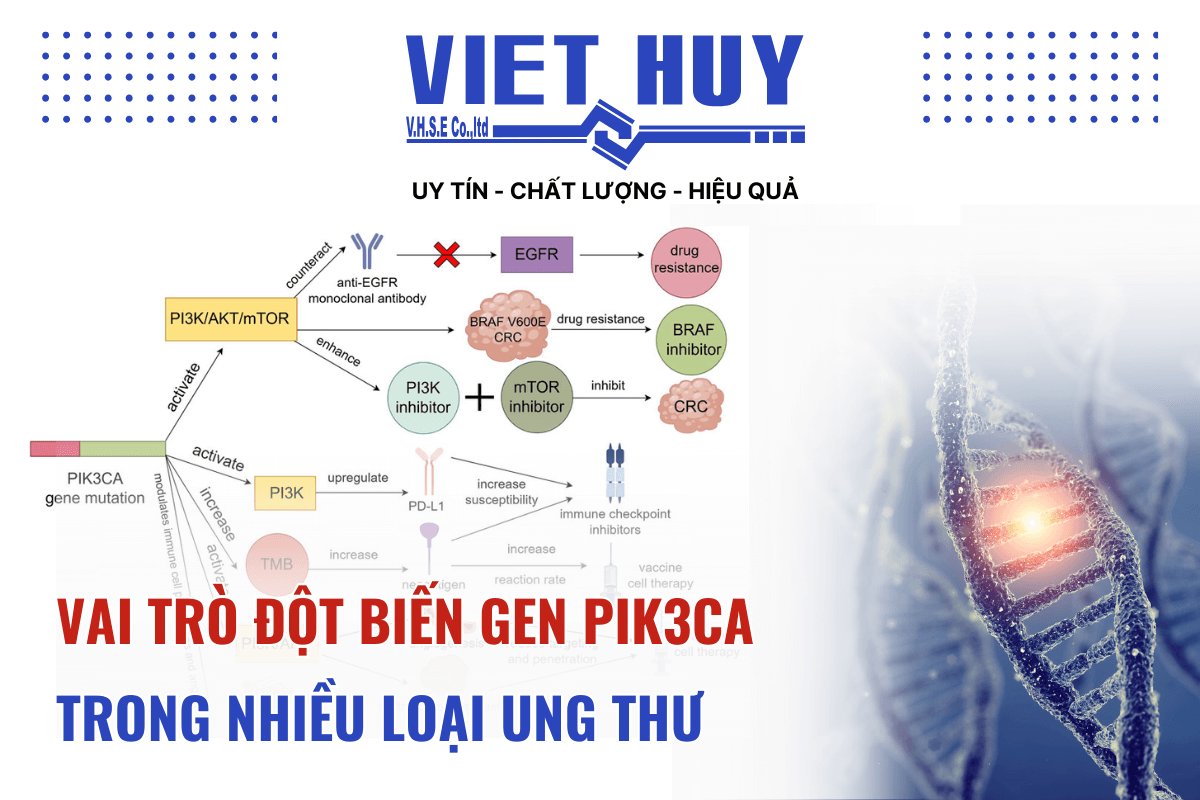
THE ROLE OF PIK3CA MUTATIONS IN VARIOUS CANCERS
PIK3CA gene mutations play an important role in many cancers, including breast, endometrial, bladder, and colorectal cancers, as well as head and neck squamous cell carcinoma. This article discusses...
Need Advice on the Right Testing Solution?
Viet Huy engineers are ready to help your laboratory choose the optimal technology.