

INTRODUCING CMV/EBV/HHV6 Real-TM Quant
Detects and quantifies 3 pathogens simultaneously in just one reaction tube
OVERVIEW OF EBV, CMV, AND HHV-6 VIRUSES
EBV
Epstein-Barr Virus (EBV), also known as Herpesvirus-4, is a virus capable of causing cancer belonging to the family Herpesviridae. EBV was first discovered in the 1960s in cancer cells isolated from Burkitt's lymphoma [7].
EBV consists of 4 parts: a double-stranded DNA genome surrounded by a polyhedral capsid; outside this are the tegument protein layer and the viral envelope, which carries glycoproteins that play a role in the virus's tropism and recognition of host cells. On average, the mature virus particle has a diameter of 122 to 180nm [9]. After the initial infection, EBV remains latent in circulating B cells of the peripheral blood, reducing antigen expression to evade the immune system. Therefore, primary EBV infection is usually asymptomatic. During its persistence, the virus can express latent or lytic proteins such as LMP1, EBNA1, etc., which alter components in the body and are potentially oncogenic [3].
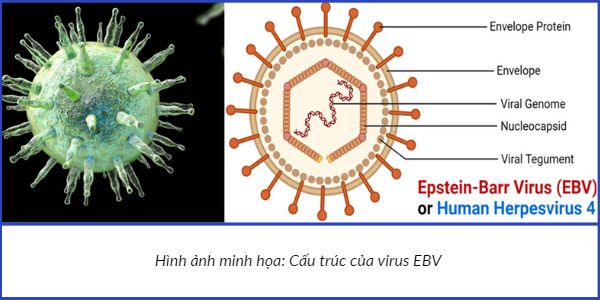
EBV is easily transmitted through saliva via activities such as kissing and sharing personal items such as toothbrushes and eating utensils [10]. In addition, blood transfusion and organ transplantation are also routes of virus transmission [11]. The worldwide prevalence of EBV varies by geography and age. In the United States, the EBV infection rate among children and adolescents aged 6 to 19 years is 66.5% [2]. In China, a study showed that EBV prevalence exceeds 50% before 3 years of age and 90% at 8 to 9 years of age [4].
The infection may be asymptomatic or may lead to serious complications such as splenic rupture, myocarditis, and encephalitis, or to cancers such as nasopharyngeal carcinoma, gastric carcinoma, Hodgkin lymphoma, some T-cell lymphomas, and post-transplant lymphoproliferative disorder [1, 5, 6]. It is estimated that more than 250,000 cancer cases per year and about 2% of cancer deaths are caused by EBV [3].
CMV
Cytomegalovirus (CMV), also known as Herpesvirus-5, is a common virus belonging to the Herpes virus family. Although CMV infection usually results in asymptomatic latent infection in healthy people, it can cause disease and death in immunocompromised patients [12, 13]. In newborns in particular, congenital CMV infection acquired from the mother during pregnancy or delivery is the leading cause of deafness of non-genetic origin. In addition, affected infants may have intellectual disability or vision loss [14].
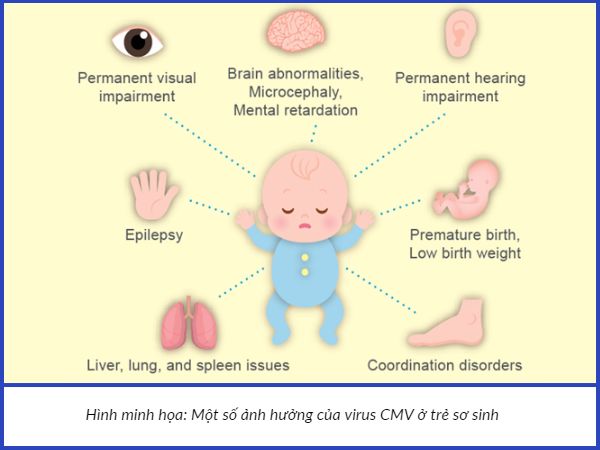
CMV has a structure similar to that of EBV: in addition to the basic components of the virus, its envelope surface carries glycoproteins that help it recognize and enter host cells (mucosal cells, fibroblasts, white blood cells, etc.) [15, 16]. CMV is mainly spread through the body fluids of infected people, such as saliva, tears, and breast milk, or by vertical transmission from mother to child during pregnancy or delivery [14]. The CMV infection rate ranges from 40-100% in adults; in newborns, the rate is 1%.
Screening for congenital CMV helps detect the cause of hearing loss so that early treatment can be started, and allows monitoring for timely intervention in late-onset cases [14].
HHV-6
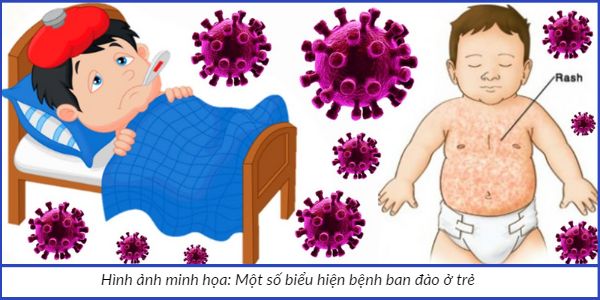
Human Herpesvirus 6 (HHV-6) was the 6th to be discovered of the 8 Herpes viruses that cause disease in humans, and it was first isolated in 1986 from patients with lymphoproliferative disorders [17]. There are currently two variants of HHV-6: HHV-6A usually affects immunocompromised people, while the more common HHV-6B is the cause of roseola in children [18].
HHV-6 has a diameter of approximately 200 nm and a structure similar to that of other Herpes viruses. The virus infects many types of human cells but replicates mainly in CD4 T lymphocytes. Many studies have shown that the HHV-6 genome can integrate into human chromosomes. Viral replication affects the function and survival of the host cell. Viral proteins create a microenvironment that favors viral activity and evasion of the body's immune system [19].
Primary HHV-6 infection causes symptoms such as fever, seizures, skin rash, and some gastrointestinal and respiratory symptoms in young children aged six months to three years, most typically roseola. Routes of transmission of the virus include saliva and organ transplantation. More than 90% of the world's population has been infected with this virus [20].
EBV/CMV/HHV-6 DETECTION TESTING
Significance of Testing
As described above, infection with EBV, CMV, and HHV-6 is associated with many dangerous diseases. Early testing to detect these viruses, especially in high-risk groups such as immunocompromised patients or newborns, helps guide timely treatment and reduces the burden of disease later on.
Testing for EBV, CMV, and HHV-6 is usually based on immunological techniques, such as quantification of anti-viral IgG and IgM antibodies in human serum or plasma, or on the real-time PCR technique.
EBV/CMV/HHV-6 Testing by Real-Time PCR
With the advantages of high sensitivity and specificity and a fast turnaround, Real-Time PCR is one of the methods commonly used to test for EBV/CMV/HHV-6. The target viral DNA in the clinical sample is detected using specifically designed primers and fluorescently labeled probes. The amplification results for the target DNA are displayed on the screen right after each thermal cycle of the reaction.
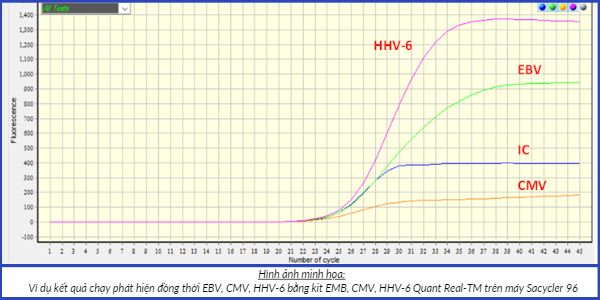
The kit CMV/EBV/HHV6 Real-TM Quant is based on the Real-Time PCR technique and can detect and quantify 3 pathogens simultaneously in just one reaction tube. In addition, the reaction also contains primers for amplifying an internal control (IC), the "housekeeping" gene β-Globin, to monitor the extraction and PCR processes. The CMV/EBV/HHV6 Real-TM Quant kit from Sacace (Italy) meets the CE-IVD standard and can be run on many different Real-Time PCR systems.
Result analysis is simple, based on signals in 4 detection channels: EBV is detected in the HEX channel, CMV in the ROX channel, HHV-6 in the Cy5 channel, and the internal control IC (β-Globin) in the FAM channel. The kit has high sensitivity: 400 copies/ ml for cerebrospinal fluid samples and 5 DNA copies/ 105 cells for whole blood, white blood cell, or biopsy samples.
References
[1] Odumade OA et al. Progress and problems in understanding and managing primary Epstein-Barr virus infections. Clin Microbiol Rev. 2011 Jan;24(1):193-209. Doi: 10.1128/CMR.00044-10.
[2] Dowd JB et al. Seroprevalence of Epstein-Barr virus infection in U.S. children ages 6-19, 2003-2010. PLoSOne. 2013;8(5):e64921. Doi: 10.1371/journal.pone.0064921.
[3] Yu H et al. 2023. Epstein-Barr Virus History and Pathogenesis. Viruses 15, no. 3: 714. https://doi.org/10.3390/v15030714
[4] Xiong G et al. Epstein-Barr virus (EBV) infection in Chinese children: a retrospective study of age-specific prevalence. PLoS One. 2014;9(6):e99857. Doi: 10.1371/journal.pone.0099857.
[5] Watanabe M et al. Acute Epstein-Barr related myocarditis: An unusual but life-threatening disease in an immunocompetent patient. J Cardiol Cases. 2020 Apr;21(4):137-140. Doi: 10.1016/j.jccase.2019.12.001.
[6] Marginean MO et al. Epstein-Barr virus-associated hemophagocytic lymphohistiocytosis in a small child: A case report. Medicine (Baltimore). 2020 Jan;99(3):e18759. Doi: 10.1097/MD.0000000000018759.
[7] Epstein, M. A et al. 1964. Virus particles in cultured lymphoblasts from Burkitt's lymphoma. Lancet i:702-703. Doi: 10.1016/s0140-6736(64)91524-7.
[9] Thompson MP et al. Epstein-Barr virus and cancer. Clin Cancer Res (2004) 10(3):803-21. 10.1158/1078-0432.CCR-0670-3. Doi: 10.1158/1078-0432.ccr-0670-3
[10] Maria K. Smatti et al. Epstein-Barr Virus Epidemiology, Serology, and Genetic Variability of LMP-1 Oncogene Among Healthy Population: An Update. Front Oncol. 2018; 8: 211. Doi: 10.3389/fonc.2018.00211.
[11] Alfieri C et al. Epstein-Barr virus transmission from a blood donor to an organ transplant recipient with recovery of the same virus strain from the recipient's blood and oropharynx. Blood (1996) 87(2):812-7. Doi: 10.1182/blood.V87.2.812.bloodjournal872812
[12] Rafailidis P.I et al. Severe cytomegalovirus infection in apparently immunocompetent patients: a systematic review. Virol. J. 2008; 5: 47. Doi: doi:10.1186/1743-422X-5-47
[13] Coaquette A et al. Mixed cytomegalovirus glycoprotein B genotypes in immunocompromised patients, Clin. Infect. Dis. 2004; 39: 155-161. Doi: 10.1086/421496
[14] Maggie Kettler et al. American Academy of Audiology Position Statement on Early Identification of Cytomegalovirus in Newborns. 2023. American Academy of Audiology. Doi: 10.1055/s-0043-1768036.
[15] Susan M. Varnum et al. Identification of Proteins in Human Cytomegalovirus (HCMV) Particles: the HCMV Proteome. J Virol. 2004 Oct; 78(20): 10960-10966. Doi: 10.1128/JVI.78.20.10960-10966.2004
[16] Paul Griffith et al. Pathogenesis of human cytomegalovirus in the immunocompromised host. (2021) Nature Reviews Microbiology 19, 759-773. Doi: 10.1038/s41579-021-00582-z
[17] Salahuddin SZ et al. Isolation of a new virus, HBLV, in patients with lympho-proliferative disorders (1986). Science 234:596-601. Doi: 10.1126/science.2876520.
[18] Ablashi D et al. Classification of HHV-6A andHHV-6B as distinct viruses. (2014). Arch Virol 159:863-870. Doi: 10.1007/s00705-013-1902-5
[19] Agut H et al. Humanherpesviruses 6A, 6B, and 7. 2016. Microbiol Spectrum 4(3):DMIH2-0007-2015. Doi: 10.1128/microbiolspec.DMIH2-0007-2015.
[20] Yamanishi K et al. Identification of human herpesvirus-6 as a causal agent for exanthem subitum. Lancet 1988, 1, 1065-1067. Doi: 10.1016/s0140-6736(88)91893-4
Related Articles

Multigene testing solution (ALK, ROS1, RET, MET) for non-small cell lung cancer (NSCLC)
Lung Cancer RNA Panel is an advanced multigene test kit that enables simultaneous detection of key mutations such as ALK, ROS1, RET, and MET in NSCLC. With an integrated quality control tool (IQCA), the kit...
HMPV: Current Situation and Control Solutions
Currently, the rising number of human metapneumovirus (HMPV) infections is causing alarm in many countries around the world. With its ability to spread widely in winter and early spring, HMPV has become a major...
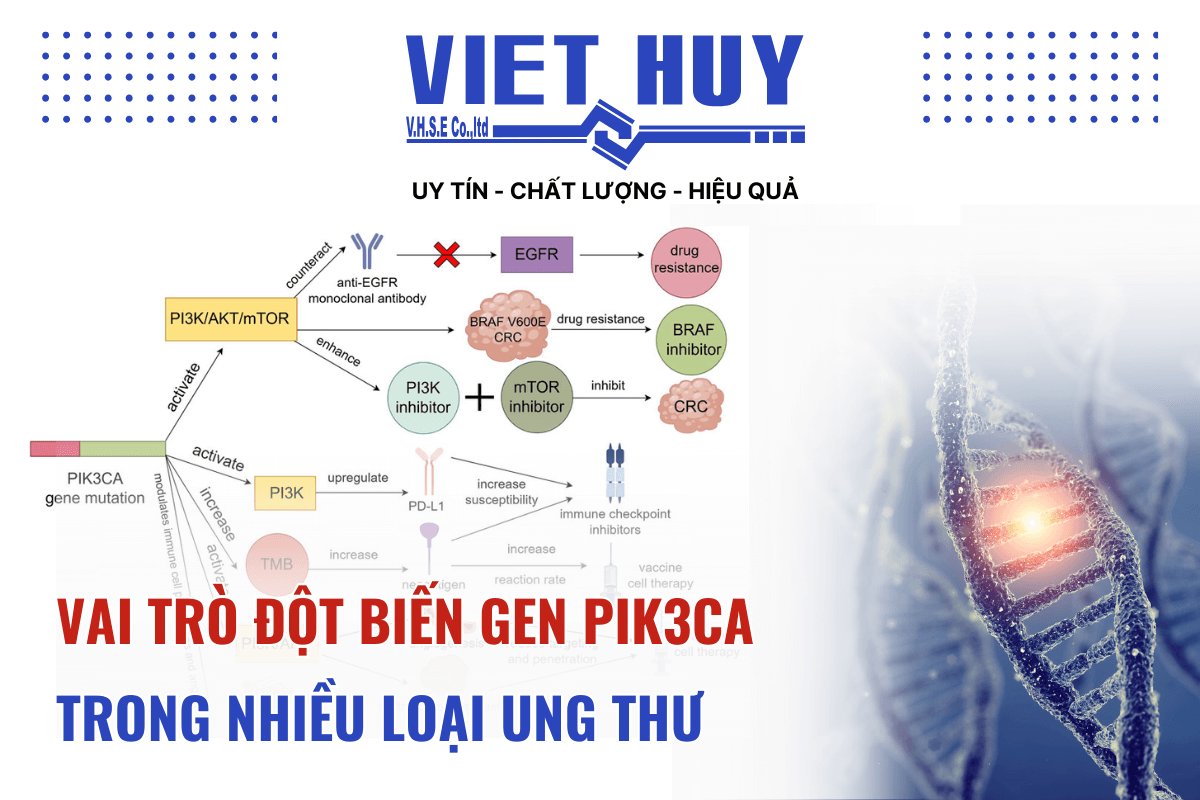
THE ROLE OF PIK3CA MUTATIONS IN VARIOUS CANCERS
PIK3CA gene mutations play an important role in many cancers, including breast, endometrial, bladder, and colorectal cancers, as well as head and neck squamous cell carcinoma. This article discusses...
Need Advice on the Right Testing Solution?
Viet Huy engineers are ready to help your laboratory choose the optimal technology.