
ENTEROVIRUS 71-TYPE REAL-TM (EV71) TEST KIT
An IVD test kit for the detection of Enterovirus 71-type (EV71), the causative agent of hand, foot and mouth disease, using Real-time PCR.
OVERVIEW OF ENTEROVIRUS 71:
Enterovirus 71 (EV71) was first isolated in 1965 and was first detected in the United States in 1969. Enterovirus 71, also known as Enterovirus A71, is a virus of the genus Enterovirus in the family Picornaviridae. The virus is spherical with a diameter of 27-30 nm, has RNA as its genetic material, and lacks an outer lipid envelope.
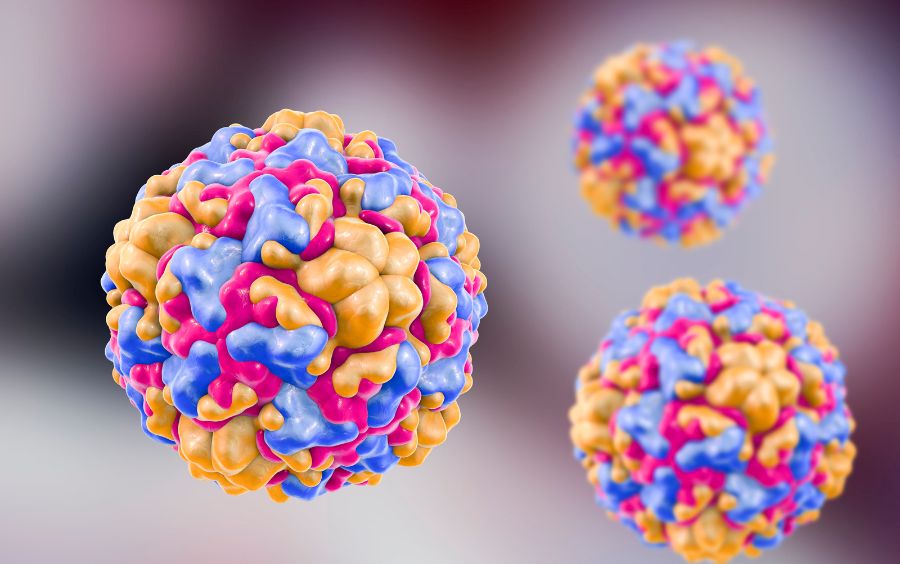
Illustration: Enterovirus 71
The virus is resistant to the environmental conditions of the host, such as the acidic environment of the human stomach. In addition, it can survive at room temperature for several days. Because enteroviruses lack an outer lipid envelope, they are not inactivated by lipid solvents such as alcohol, ether, chloroform, and phenol. However, they are easily inactivated by common disinfectants such as 2% sodium hypochlorite (Javel water), potassium permanganate (KMnO4), and hydrogen peroxide (H2O2).
HAND, FOOT AND MOUTH DISEASE AND EV71
Hand, foot and mouth disease is an infectious disease that spreads from person to person and can develop into an epidemic. The disease is common in young children under 5 years of age and is mainly transmitted via the gastrointestinal route, with the main sources of infection being the saliva, blisters, and feces of infected children.
The 2 agents that commonly cause hand, foot and mouth disease are Coxsackie virus A16 and Enterovirus 71 (EV71). The main manifestations of the disease are skin and mucosal lesions in the form of blisters at characteristic sites such as the oral mucosa, palms, soles, buttocks, and knees. Usually, the disease resolves on its own within 10 days as the body produces enough antibodies to fight the virus. However, if the cause is EV71, the disease may follow a complicated course with dangerous clinical complications such as pneumonia, myocarditis, or meningitis, and can even be fatal.

Illustration: Manifestations of hand, foot and mouth disease
Since the 1990s, hand, foot and mouth disease has been common in several countries in the region, such as China, Hong Kong, and Taiwan. In 2008, Taiwan experienced an outbreak of hand, foot and mouth disease with 347 severe cases and as many as 14 deaths3. In China, more than 1 million cases of hand, foot and mouth disease were recorded in 2009, including over 13,000 severe cases and more than 300 deaths6. During the same period, a study in Guangdong showed that EV71 accounted for the majority of hand, foot and mouth disease cases (up to 56%)7. In addition, Singapore recorded an outbreak of hand, foot and mouth disease in 2000 with 3790 infections, most of them in children under 4 years of age (78.8%), and a virus isolation study of 104 patients found that 73.1% were positive for EV711.
In Vietnam, according to WHO data, hand, foot and mouth disease is endemic every year in most provinces and cities, with 2 epidemic peaks: from March to May and from September to the end of December. Each year, the country has about 50,000 to 100,000 cases of hand, foot and mouth disease, and the southern region is the most affected, accounting for more than 60% of cases. In 2011, Vietnam recorded a sharp increase, with more than 11,000 cases and 169 deaths across all provinces and cities nationwide. Of the 169 deaths, 87% were patients under 3 years of age, and as many as 103 samples (61%) were positive for Enterovirus, of which EV71 accounted for 82% (84 of 103 samples)2. During the same period, a study by Dr. Truong Huu Khanh at City Children's Hospital (Campus 1) of 3972 children found that 174 children had severe complications. Of these 174 children, as many as 132 (76%) tested positive for EV714.
Data from countries in the region and from Vietnam show that most hand, foot and mouth disease patients with severe complications or fatal outcomes tested positive for EV71.
TESTS FOR DETECTING EV71:
According to Decision No. 1003/QD-BYT issued by the Ministry of Health (MOH), "ON THE PROMULGATION OF GUIDELINES FOR THE DIAGNOSIS AND TREATMENT OF HAND, FOOT AND MOUTH DISEASE", 2 methods are used for the confirmatory and differential diagnosis of the virus: virus isolation and the RT-PCR technique
Detection by RT-qPCR (Reverse Transcription qPCR) allows EV71 to be detected directly in samples. This method uses the same principle as Real-time PCR. However, RT-qPCR includes an additional step before amplification, called reverse transcription, in which the enzyme reverse transcriptase converts the RNA fragments in the sample into cDNA (Complementary DNA).
The RT-PCR method offers many outstanding advantages in terms of speed and high accuracy, so it is the preferred method in current testing. However, the genetic material of EV71 is RNA, which must be converted into cDNA to perform the RT-PCR reaction. As a result, EV71 diagnosis is relatively time-consuming, and cross-contamination may occur during the procedure, leading to false-positive results. The Enterovirus 71-Type Real-TM test kit (Sacace) is optimized to detect EV71 in a single amplification step, reducing hands-on time and the risk of contamination during the procedure.
ENTEROVIRUS 71-TYPE REAL-TM (EV71) TEST KIT
Intended Use
Enterovirus 71-Type Real-TM (EV71) is a test kit for the detection of Enterovirus-71, the causative agent of hand, foot and mouth disease, using Real-time PCR.
Sample Source
A wide range of sample sources: cerebrospinal fluid, whole blood, swabs, tissue, stool, and water samples.
Product Information
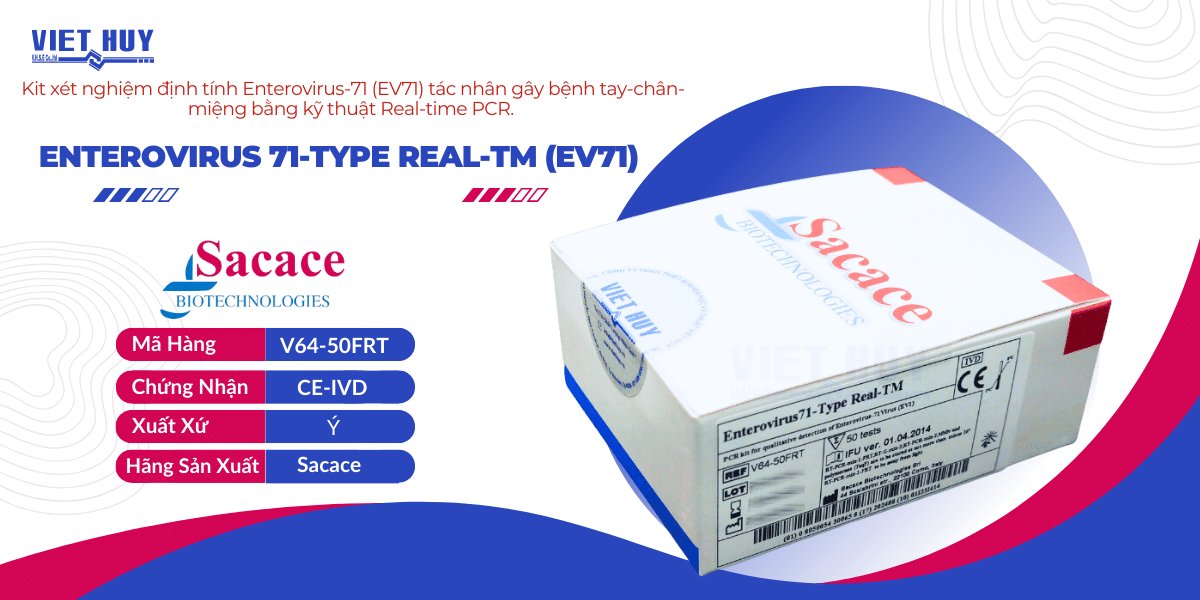
Image: ENTEROVIRUS 71-TYPE REAL-TM (EV71) TEST KIT
KEY ADVANTAGES
- High sensitivity: 10^3 copies/ml
- Certifications: CE-IVD, ISO 13485
- Simple procedure; one-step amplification reduces time and limits cross-contamination
- Validated on common Real-time PCR instruments (SaCycler-96™ (Sacace), CFX96™/iQ5™ (BioRad); Applied Biosystems® 7300/7500 Real Time PCR, etc.)
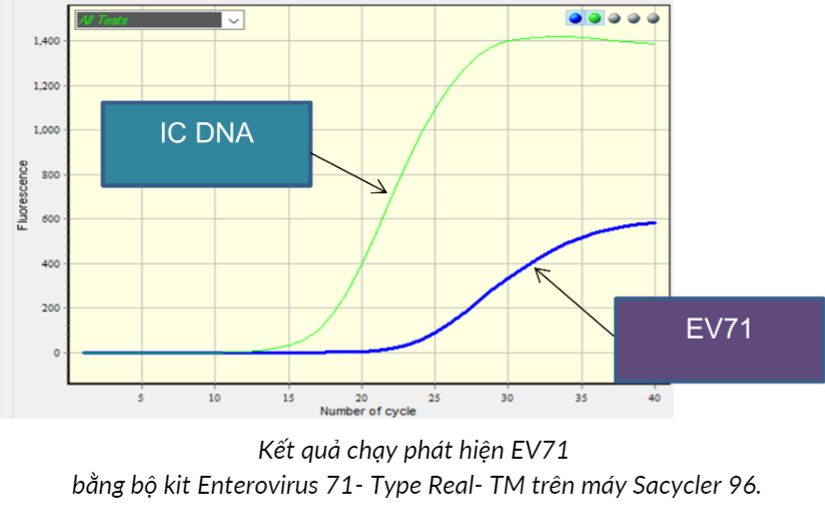
- Simple result analysis based on only 2 detection channels: the JOE (Yellow)/HEX/Cy3 channel for EV71 cDNA and the FAM channel for IC DNA (internal control DNA)
CONCLUSION
Enterovirus 71 (EV71) is known as a common cause of hand, foot and mouth disease in children, with dangerous complications such as pneumonia, meningitis, and even death. Therefore, early signs of the disease in children should never be taken lightly. EV71 testing should be performed so that complications can be treated and prevented in a timely and effective manner.
The Enterovirus 71-Type Real-TM (EV71) (Sacace - Italy) test kit is distributed by VIET HUY Technological Scientific Equipment Co., Ltd, the exclusive representative of Sacace in Vietnam. The kit is currently used in many hospitals and clinics across the country.
Contact information:
VIET HUY Technological Scientific Equipment Co., Ltd
Address: 33 Nguyen Quy Canh, An Phu Ward, Thu Duc City, Ho Chi Minh City
Email: info@viethuy.vn
Website: www.viethuy.vn
Phone: 028 6287 1596 / 99
REFERENCES
1. Kwai Peng Chan, et al. (2003). Epidemic Hand, Foot and Mouth disease caused by Human Enterovirus 71, Singapore. Emerging Infectious Diseases, Vol. 9, No.1, 78. DOI: 10.3201/eid0901.020112.
2. Ngoc TB Nguyen, et al. (2011). Epidemiological and clinical characteristics of children who died from hand, foot and mouth disease in Vietnam. BMC Infectious Diseases, Vol14, 341. DOI: 10.1186/1471-2334-14-341.
3. Min- Shi Lee, et al. (2010). An Investigation of Epidemic Enterovirus 71 Infection in Taiwan, 2008. The Pediatric Infectious Disease Journal, Volume 29. DOI: 10.1097/INF.0b013e3181e52945.
4. T.H. Khanh, et al. (2012). A large epidemic of enterovirus 71 associated hand, foot and mouth disease in southern Vietnam. International Journal of Infectious Diseases 16S. DOI: 10.1016/j.ijid.2012.05.932.
5. WHO. Hand, foot and mouth disease [In Vietnamese]. https://www.who.int/vietnam/vi/health-topics/hand-foot-and-mouth-disease-(hfmd).
6. WHO. (2011). A guide to clinical management and public health response for hand, foot and mouth disease (HFMD).
7. Wu De, et al. (2011). A large outbreak of hand, foot, and mouth disease caused by EV71 and CAV16 in Guangdong, China, 2009. Arch Virol, Vol 156, 945. DOI: 10.1007/s00705-011-0929-8.
Related Articles

Multigene testing solution (ALK, ROS1, RET, MET) for non-small cell lung cancer (NSCLC)
Lung Cancer RNA Panel is an advanced multigene test kit that enables simultaneous detection of key mutations such as ALK, ROS1, RET, and MET in NSCLC. With an integrated quality control tool (IQCA), the kit...

HMPV: Current Situation and Control Solutions
Currently, the rising number of human metapneumovirus (HMPV) infections is causing alarm in many countries around the world. With its ability to spread widely in winter and early spring, HMPV has become a major...
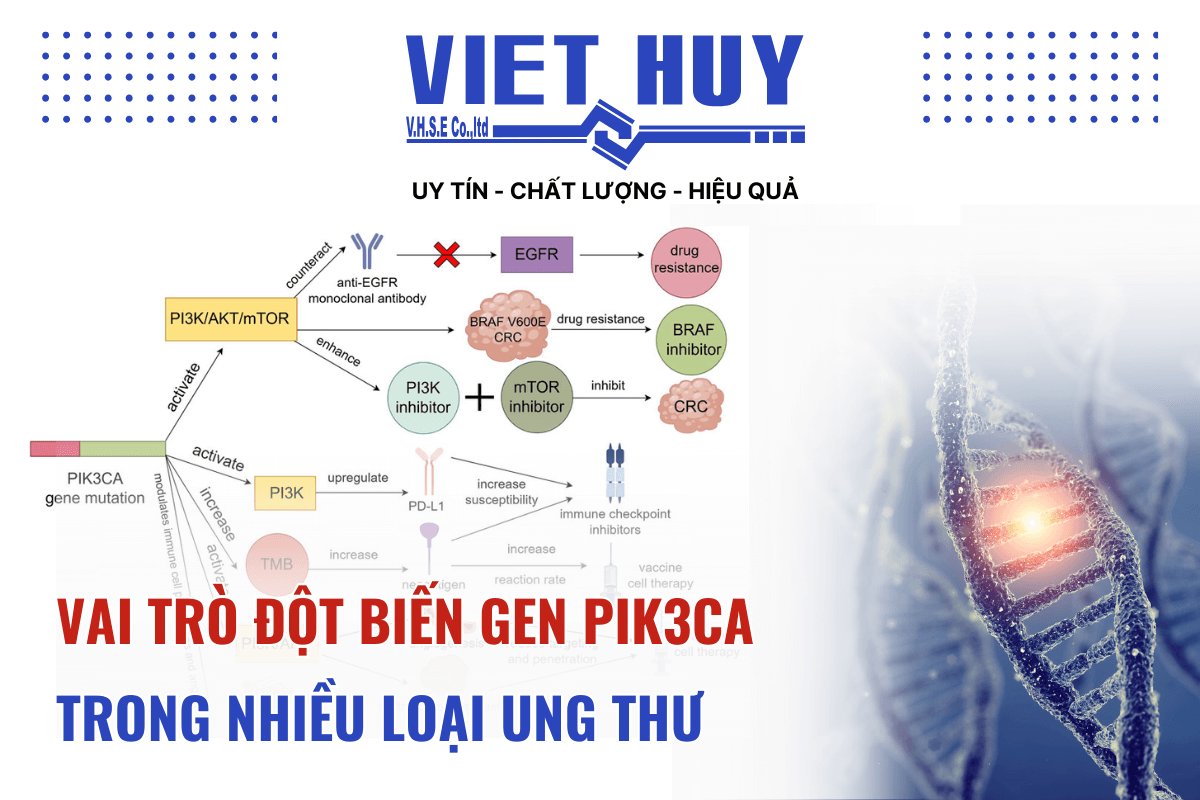
THE ROLE OF PIK3CA MUTATIONS IN VARIOUS CANCERS
PIK3CA gene mutations play an important role in many cancers, including breast, endometrial, bladder, and colorectal cancers, as well as head and neck squamous cell carcinoma. This article discusses...
Need Advice on the Right Testing Solution?
Viet Huy engineers are ready to help your laboratory choose the optimal technology.