

GROUP B STREPTOCOCCUS (GBS) TEST KIT
"Strep B Real-TM Quant" - Test kit for the qualitative and quantitative detection of Group B Streptococcus (GBS) DNA in many types of clinical samples
OVERVIEW OF GBS
The Impact of GBS Infection on Pregnant Women and Newborns
Group B Streptococcus, abbreviated as GBS (Group B streptococcus), also known as Streptococcus agalactiae, is a Gram-positive bacterium capable of hemolysis. GBS has an antiphagocytic polysaccharide capsule that helps it evade the immune system, contributing significantly to the pathogenicity of the bacterium.1 In adults, the bacterium is found in the lower intestinal tract and the vagina at a rate of 15 to 30% but is usually harmless. For pregnant women in particular, GBS infection increases the risk of urinary tract infection and preterm birth, and about 50% will transmit the bacterium to their babies during labor or after rupture of the membranes.2

Figure 1: The GBS infection process. GBS invasion of the vagina increases the risk of infectious disease during pregnancy. GBS infection during pregnancy is associated with colonization of the vagina by the bacteria, which in a small number of cases leads to bacterial invasion of the fetal membranes (chorion and amnion). GBS carries several virulence factors that promote colonization of, adhesion to, and invasion of vaginal mucosal cells, as well as transmission to the infant during labor.3
In some newborns, the bacteria, after entering the body, cause early-onset GBS disease (within the first week after birth) or late-onset GBS disease (from the second week to 3 months after birth). Common clinical manifestations such as sepsis, meningitis, and pneumonia can lead to death. Late-onset GBS infection is less common and has a lower mortality rate than early-onset GBS infection. Besides vertical transmission from the mother, late-onset GBS infection can also come from the external environment.2
According to World Health Organization (WHO) data, the average mortality rate among infants infected with GBS is about 8.4%, and in 2015 alone the figure reached as many as 84,000 infants. In addition, newborns who survive invasive GBS infection may suffer long-term consequences related to neurodevelopmental impairment.4
Screening and Prophylactic Treatment for GBS Infection Risk
Maternally derived anti-GBS IgG antibodies were first shown in the 1970s to be an important factor in preventing GBS infection in newborns. This suggested the possibility of developing a maternal vaccine. However, to date, all vaccines are still in the trial phase and are not yet eligible for market release or use in expanded immunization programs.4
Intrapartum antibiotic prophylaxis is the most widely used prevention strategy against GBS infection in newborns. Antibiotics are given intravenously to the pregnant woman about four hours before delivery to prevent GBS transmission to the baby. Many studies have shown that this strategy has significantly reduced the rate of early-onset GBS in infants.5 However, pregnant women at risk of GBS infection must be correctly identified to avoid unnecessary antibiotic use, which increases antibiotic resistance and affects the infant's gut microbiota.
According to current guidelines of the American College of Obstetricians and Gynecologists, all pregnant women should undergo antenatal GBS screening between 36 and 37 weeks 6 days of gestation, unless prophylaxis is already indicated because of a GBS infection in the current pregnancy or a history of giving birth to an infant with GBS infection. This is because GBS infection status can change during pregnancy. GBS infection in the third trimester has been used to predict the risk of transmission during labor. The negative predictive value of a GBS test performed less than 5 weeks before delivery is 95-98%. Pregnant women with a positive result receive a prophylactic regimen with Penicillin or other antibiotics such as Clindamycin or Vancomycin, depending on allergy and drug resistance status.5
Techniques Used in GBS Screening
Vaginal and rectal swabs are used for GBS screening. Currently, two methods are commonly used for GBS screening:5
- Culture-based GBS identification techniques: After collection, clinical samples are enriched in a selective medium (18-24 hours). The samples are then plated on agar media and observed for suspicious colonies growing on the plates (24-48 hours). The CAMP test, latex agglutination, or MALDI-TOF mass spectrometry is used to identify GBS colonies. The total time for this method ranges from 48 to more than 72 hours.
- Real-time PCR technique: detects the presence of GBS DNA in the sample with a fast turnaround (only 2-3 hours) and high sensitivity and specificity, providing timely results, especially in cases of preterm birth, premature rupture of membranes, and labor without a previous GBS test record.
GBS DETECTION TEST KIT: Strep B Real-TM Quant
Purpose
Strep B Real-TM Quant is a test kit for the qualitative and quantitative detection of Streptococcus agalactiae (GBS) DNA by the Real-time PCR technique in clinical samples
Sample Source
Various sample sources: swabs, blood cultures, bacterial cultures, urine
Product Information
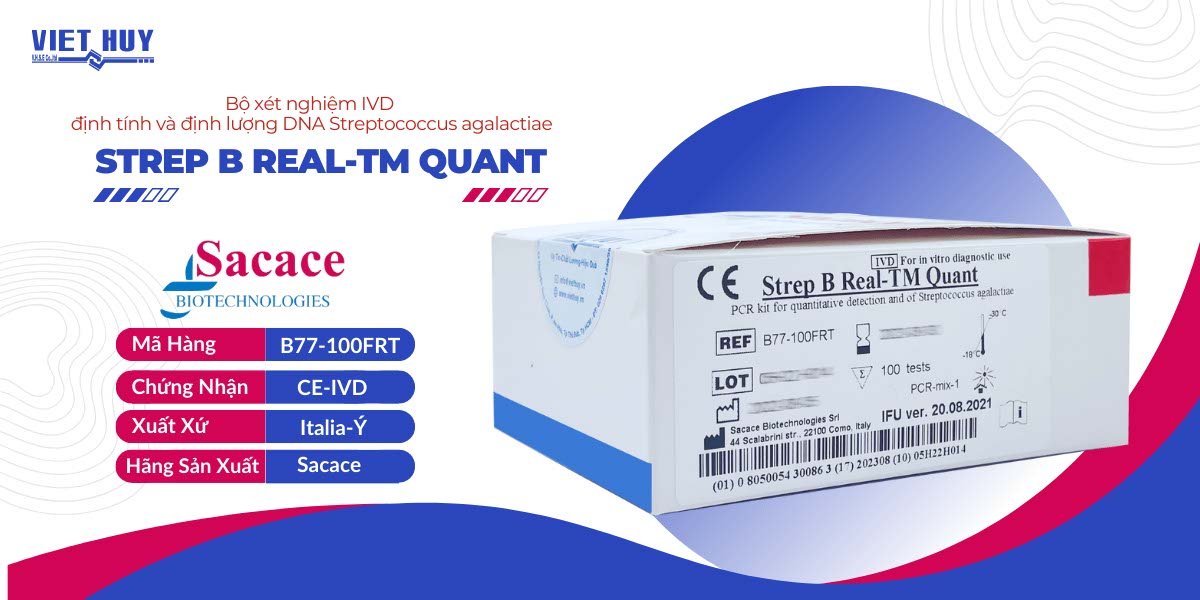
Image of the Strep B Real-TM Quant test kit
Key Product Advantages
1. High sensitivity: 300 copies/ml
2. Certifications: CE-IVD, ISO 13485
3. Includes exogenous and endogenous internal controls to monitor sample collection, extraction, and Real-Time PCR
4. Validated on common Real-time PCR instruments (SaCycler-96™ (Sacace), CFX96™/iQ5™ (BioRad); Applied Biosystems® 7300/7500 Real Time PCR, etc.)
5. Simple result analysis based on 3 detection channels:
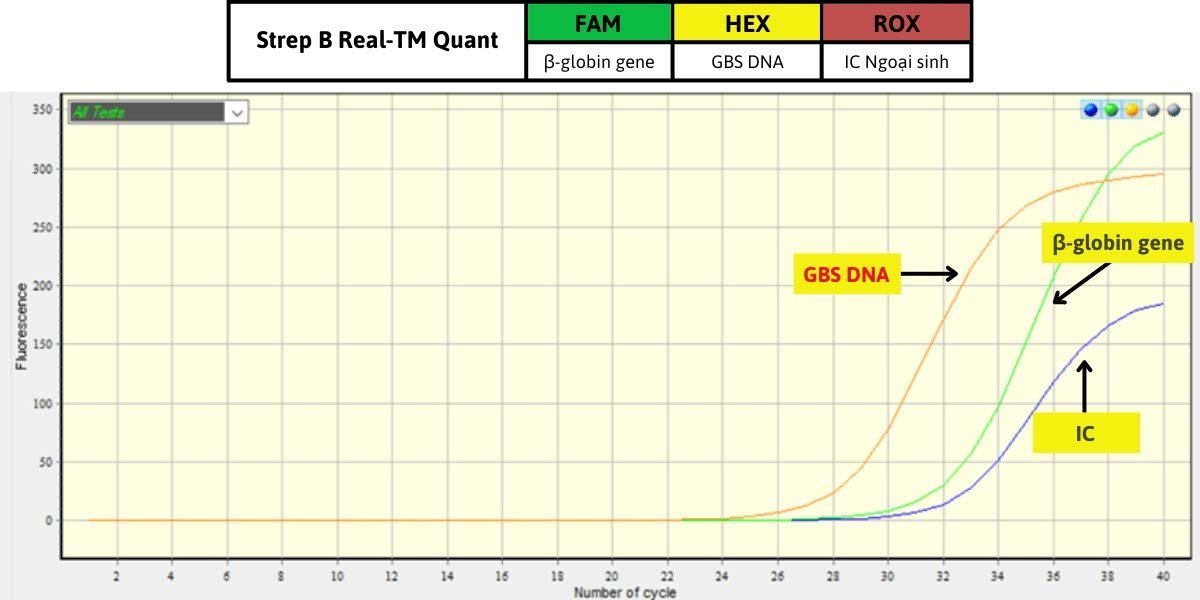
Figure 2: Illustrative run results of the Strep B Real-TM Quant kit on the Sacycler 96
CONCLUSION
Group B Streptococcus is the leading cause of neonatal infection. GBS infection acquired from the mother during labor is the main risk factor for early-onset GBS disease in infants. Screening pregnant women for GBS, combined with antibiotic prophylaxis, is an effective preventive measure that reduces the risk of infants developing dangerous and potentially fatal diseases caused by GBS infection. Real-time PCR is a rapid method with high sensitivity and specificity, making it an effective testing solution that supports timely results when screening during pregnancy as well as in emergencies.
The test kit Strep B Real-TM Quant (Sacace - Italy) is distributed by VIET HUY Technological Scientific Equipment Co., Ltd, the exclusive representative of SACACE in Vietnam. The kit is currently used in many hospitals and clinics nationwide.
CONTACT INFORMATION
VIET HUY Technological Scientific Equipment Co., Ltd
Address: 33 Nguyen Quy Canh, An Phu Ward, Thu Duc City, Ho Chi Minh City
Email: info@viethuy.vn
Web: www.viethuy.vn
Phone: 028 6287 1596 / 99
REFERENCES
[1]. Hossein YektaKooshali M, Hamidi M, Mohammad Taghi Razavi Tousi S, Nikokar I. Prevalence of group B streptococcus colonization in Iranian pregnant women: A systematic review and meta-analysis. Int J Reprod Biomed. 2019 Jan 28;16(12):ijrm.v16i12.3679. doi: 10.18502/ijrm.v16i12.3679.
[2]. Landwehr-Kenzel S, Henneke P: Interaction of Streptococcus agalactiae and cellular innate immunity in colonization and disease. Front Immunol 5:519, 2014.
[3]. Vornhagen J, Adams Waldorf KM, Rajagopal L. Perinatal Group B Streptococcal Infections: Virulence Factors, Immunity, and Prevention Strategies. Trends Microbiol. 2017 Nov;25(11):919-931. doi: 10.1016/j.tim.2017.05.013. Epub 2017 Jun 17.
[4]. World Health Organization & London School of Hygiene and Tropical Medicine. (2021). Group B streptococcus vaccine: full value of vaccine assessment: executive summary. World Health Organization. https://apps.who.int/iris/handle/10665/347596.
[5]. Filkins L, Hauser JR, Robinson-Dunn B, Tibbetts R, Boyanton BL, Revell P. American Society for Microbiology Provides 2020 Guidelines for Detection and Identification of Group B Streptococcus. J Clin Microbiol. 2020 Dec 17;59(1):e01230-20. doi: 10.1128/JCM.01230-20. PMID: 33115849; PMCID: PMC7771461.
Related Articles

Multigene testing solution (ALK, ROS1, RET, MET) for non-small cell lung cancer (NSCLC)
Lung Cancer RNA Panel is an advanced multigene test kit that enables simultaneous detection of key mutations such as ALK, ROS1, RET, and MET in NSCLC. With an integrated quality control tool (IQCA), the kit...

HMPV: Current Situation and Control Solutions
Currently, the rising number of human metapneumovirus (HMPV) infections is causing alarm in many countries around the world. With its ability to spread widely in winter and early spring, HMPV has become a major...

THE ROLE OF PIK3CA MUTATIONS IN VARIOUS CANCERS
PIK3CA gene mutations play an important role in many cancers, including breast, endometrial, bladder, and colorectal cancers, as well as head and neck squamous cell carcinoma. This article discusses...
Need Advice on the Right Testing Solution?
Viet Huy engineers are ready to help your laboratory choose the optimal technology.