
The State of Respiratory Diseases in Children and the Threat from hRSV and hMPV
RSV - A Formidable "Enemy" of Young Children
RSV is the leading cause of pneumonia and bronchiolitis, especially in children under 2 years of age. According to a 2021 study, RSV causes more than 30% of hospitalizations due to acute respiratory infections in children, with the highest mortality among newborns and premature infants1. The virus can spread rapidly through the respiratory route and often leads to severe respiratory failure without timely intervention.
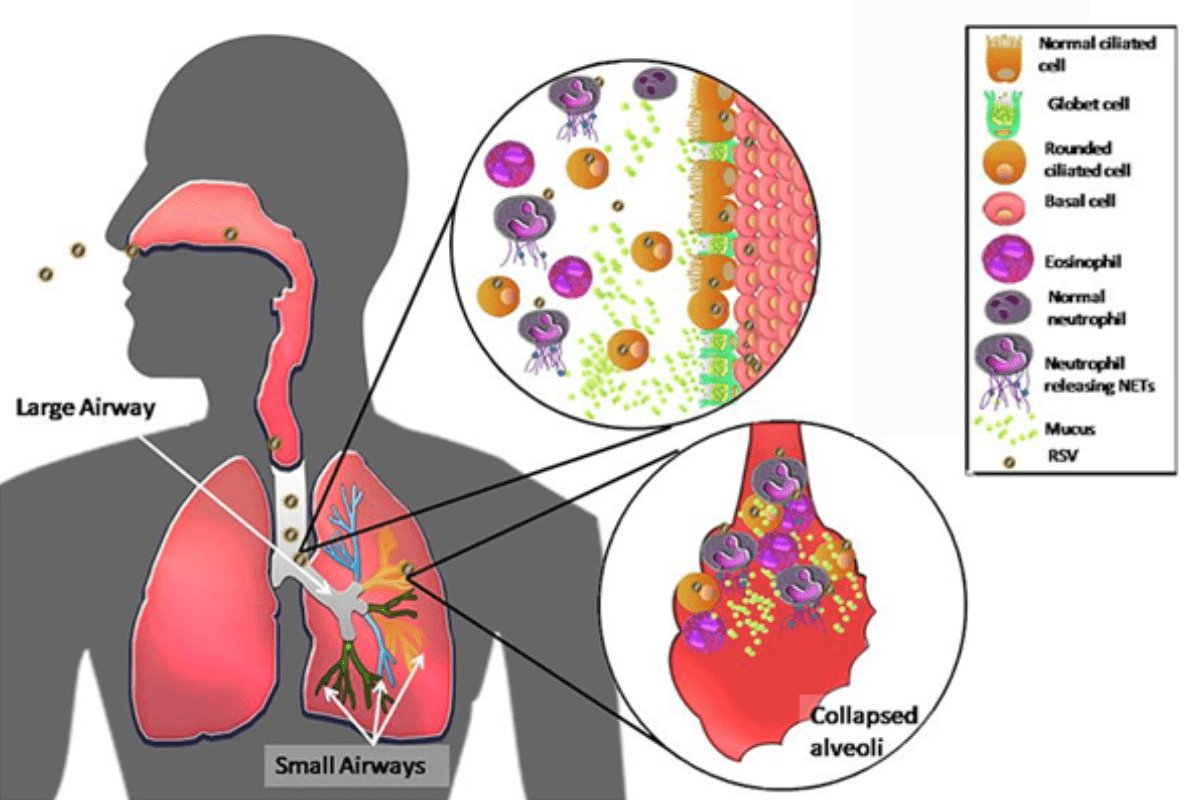
Figure 1: Illustration of the pathogenic mechanism of RSV (respiratory syncytial virus) in the human respiratory tract. RSV attacks the ciliated cells of the large airways, causing cell deformation and sloughing, with cellular debris accumulating in the airway lumen. The virus also stimulates the proliferation of mucus-secreting cells and recruits neutrophils, leading to obstruction of the small airways and alveolar collapse, resulting in acute inflammation and lung damage. [https://doi.org/10.3389/fimmu.2019.02152]
hMPV - A Hidden Threat That Is Hard to Recognize
hMPV, first identified in 2001, is another important cause of respiratory diseases in children. Symptoms of hMPV include cough, fever, shortness of breath, and bronchitis, which are often similar to those of RSV, making diagnosis complicated. According to a study published in the Journal of Infectious Diseases, hMPV accounts for 10-12% of respiratory infections in young children2. The virus is common in winter and spring, adding to the burden on healthcare systems that are already strained during influenza outbreaks.
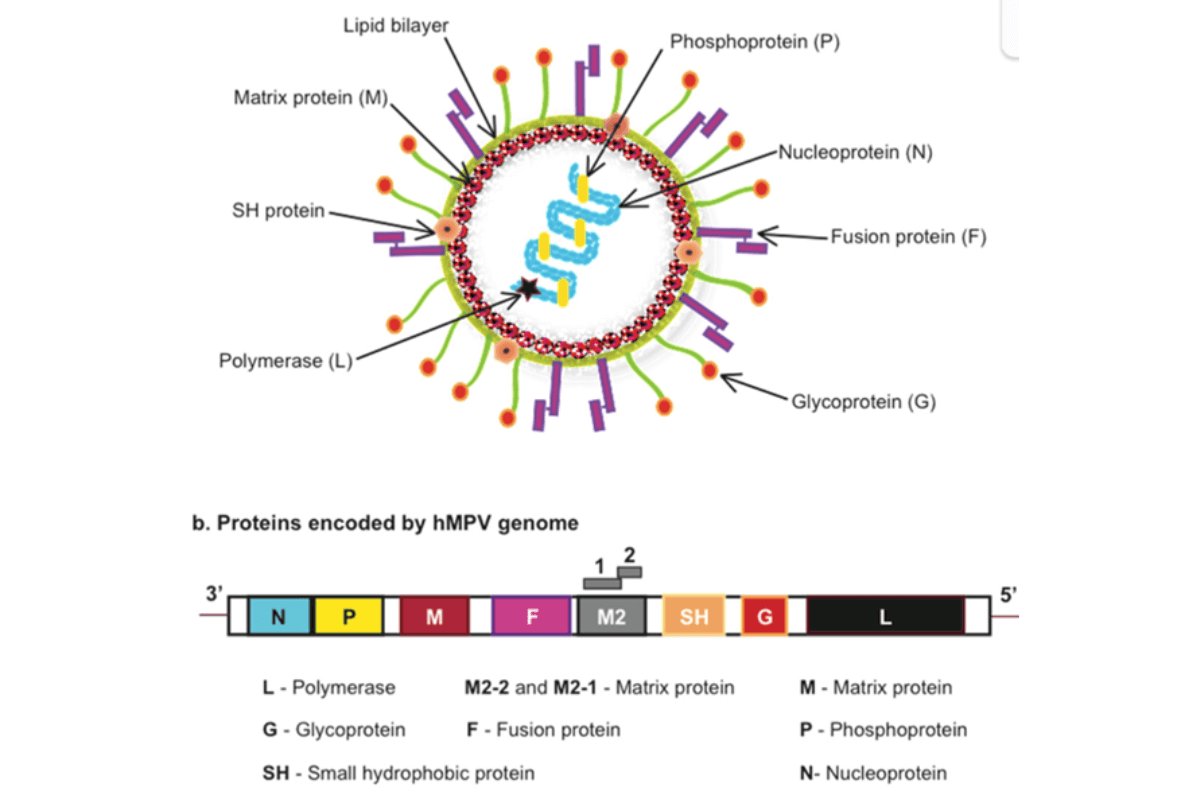
Figure 2: Illustration of the model structure and the proteins encoded by Human Metapneumovirus (hMPV), including (a) the hMPV model structure and (b) the viral proteins encoded by the viral genome.
Why Is Rapid Detection Important?
Accurately distinguishing RSV, hMPV, and other respiratory viruses is a prerequisite for choosing an appropriate treatment regimen. Misdiagnosis can increase the rate of serious complications, prolong recovery time, and increase the risk of disease transmission3.
ARVI Screen Real-TM Multiplex Kit: A Breakthrough Diagnostic Tool

Figure 3: ARVI Screen Real-TM kit by Sacace Biotechnologies (Italy).
The ARVI Screen Real-TM kit developed by Sacace Biotechnologies (Italy) is an advanced solution based on multiplex Real-time PCR technology, enabling rapid and accurate detection of 11 viral respiratory pathogens. This IVD assay can detect common viruses, including4:
+ Human respiratory syncytial virus (hRSV)
+ Human metapneumovirus (hMpv)
+ Human parainfluenza virus (hPiV) type 1
+ Human parainfluenza virus (hPiV) type 2
+ Human parainfluenza virus (hPiV) type 3
+ Human parainfluenza virus (hPiV) type 4
+ Human coronavirus (hCov) types E229, NL63
+ Human coronavirus (hCov) types OC43, HKU1
+ Human rhinovirus (hRv)
+ Human adenovirus types B, C, and E (hAdv)
+ Human bocavirus (hBov)
Key Features:
1. Rapid detection: Test turnaround time within 3 hours.
2. Wide range of input sample types: Nasal/pharyngeal swabs, sputum, tracheal aspirates, bronchoalveolar lavage fluid, biopsy samples.
3. High accuracy: Detects and differentiates 11 respiratory pathogens in a single sample.
4. Supports timely treatment: Ensures selection of an appropriate regimen, reducing the risk of complications.
Conclusion
RSV and hMPV are the two main agents causing serious respiratory diseases in children, especially in the winter-spring season. With the support of advanced diagnostic tools such as the ARVI Screen Real-TM kit, early detection and properly targeted treatment become more feasible, helping to reduce the load on the healthcare system and protect children's health.
References:
1. Shi, T., et al. (2017). Global, regional, and national disease burden estimates of acute lower respiratory infections due to respiratory syncytial virus in young children in 2015: a systematic review and modelling study. The Lancet, 390(10098), 946-958.
2. Boivin, G., et al. (2020). Human metapneumovirus infections in hospitalized children: clinical features and outcomes. Journal of Clinical Virology, 124, 104262.
3. Griffin, M. P., et al. (2020). Respiratory syncytial virus and its impact on infants and young children: A global perspective. The Journal of Pediatrics, 218, S3-S12.
4. Sacace Biotechnologies. (2024). ARVI Screen Real-TM Kit Technical Manual.
Related Articles
FDA Approves Zidesamtinib (Jideytro) for ROS1+ Lung Cancer
The FDA has officially approved Zidesamtinib (Jideytro) for patients with ROS1+ non-small cell lung cancer previously treated with a TKI. Learn about its clinical efficacy now.
Read moreVIET HUY NEW YEAR KICKOFF 2026: RECHARGED AND READY FOR A BREAKTHROUGH 2026
Summary of the 2026 New Year kickoff article by VIET HUY Technological Scientific Equipment Co., Ltd: Event: The Viet Huy team officially returned to work after the Tet holiday with traditional activities such as exchanging New Year wishes, handshakes, and giving lucky red envelopes. Goals for 2026: Improve the quality of services and technical solutions. Accelerate innovation and creativity in scientific & biomedical equipment. Increase sustainable value for partners and customers. Message: A spirit of unity, a determination to break through, and a drive for success in the new year's projects. Contact information: Head office in Ho Chi Minh City, representative offices in Hanoi and Da Nang, and Hotline: 0913 605 512.
Read more
CERVICAL CANCER SCREENING - THE ROLE OF HPV TESTING
Cervical cancer is a dangerous and common disease in women. However, it can be effectively prevented through screening and HPV vaccination
Read moreNeed help choosing the right testing solution?
Viet Huy engineers are ready to help your laboratory choose the optimal technology.