

Next-Generation Sequencing (NGS) in BRCA Mutation Analysis: The Optimal Tool for Diagnosing Hereditary Breast and Ovarian Cancer
Next-generation sequencing (NGS) helps detect BRCA mutations in hereditary breast and ovarian cancer, delivering high accuracy and improving treatment approaches.
Breast and Ovarian Cancer
Breast cancer is the most common cancer in women and one of the three most common malignancies worldwide, along with lung cancer and rectal cancer. Although breast cancer mortality has declined in the United States and the EU, half a million people still died of the disease in 2012. The decline in mortality has been associated with early detection and improved treatment options [9].
Ovarian cancer is less common than breast cancer but is associated with higher mortality. Because ovarian cancer can present with nonspecific symptoms and there is no effective screening test, it is often diagnosed at an advanced stage and is therefore associated with a low average 5-year survival rate [5].
BRCA1 and BRCA2 Gene Mutations - Are They the Main Cause of Hereditary Breast and Ovarian Cancer?
Inherited genetic traits in breast cancer have been recognized since the 19th century. Epidemiological and family studies show that up to 15% of women diagnosed with invasive breast cancer have at least one female relative with the disease [6]. The search for genetic biomarkers in breast cancer patients led to the discovery of the breast cancer susceptibility genes BRCA1 and BRCA2.
The BRCA1 gene is located on chromosome 17 and consists of 24 exons, 22 of which encode 1863 amino acids while the rest are non-coding, whereas BRCA2 consists of 27 exons encoding a protein of 3418 amino acids. Both genes help maintain DNA integrity by binding to proteins that repair double-strand breaks. When these genes are mutated, DNA repair function is impaired, leading to accumulated damage and an increased risk of cancer [1].
Germline mutations in one or both of the BRCA1 and/or BRCA2 genes can lead to hereditary breast and ovarian cancer syndrome (HBOC). This syndrome is associated with early-onset breast cancer as well as an increased risk of ovarian, pancreatic, and prostate cancer, among others [8]. For BRCA1 mutation carriers, the risk of developing breast cancer or ovarian cancer by age 70 is 50 to 70% and 30-40%, respectively. For BRCA2 mutation carriers, the corresponding figures are 40-50% for breast cancer and 10-15% for ovarian cancer [8].
Identifying BRCA mutations helps patients understand their personal risk and adopt preventive measures such as early screening or prophylactic surgery [2].
Detecting BRCA mutations not only helps determine the risk of breast cancer but also guides treatment. Patients carrying BRCA mutations often respond well to targeted therapies such as PARP inhibitors, which inhibit the DNA repair capacity of cancer cells and thereby kill them [2],[3].
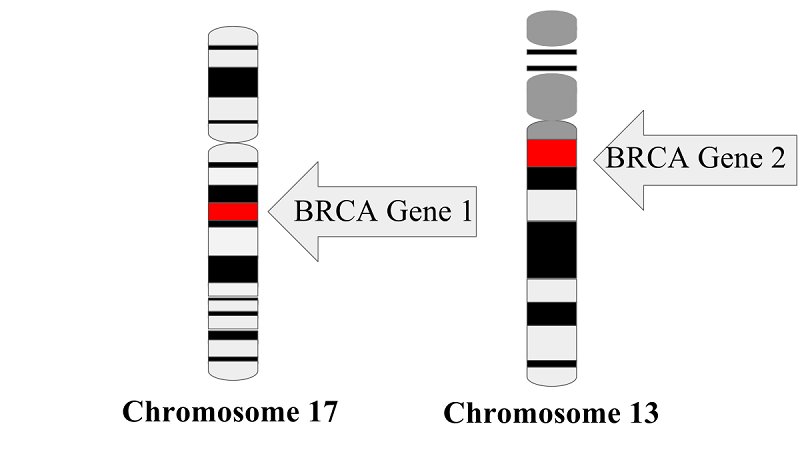
Figure 1: Location of the BRCA1 and BRCA2 genes on chromosomes
Benefits of BRCA testing:
- - Preventive surgery: Measures such as removal of the breasts or ovaries can help reduce the risk of cancer in women carrying BRCA mutations.
- - Early screening: People with BRCA mutations often need cancer screening with MRI instead of mammograms for early detection.
- - Personalized therapy: BRCA test results help physicians select the appropriate treatment, from hormone therapy to chemotherapy [3], [4].
Next-Generation Sequencing (NGS) in BRCA Mutation Detection
Next-generation sequencing (NGS) has changed the way we detect BRCA1 and BRCA2 mutations. With the advent of NGS, the number of sequence variants detected in BRCA1 and BRCA2 is increasing rapidly. NGS is a technology capable of analyzing thousands of DNA fragments in a single test, saving time and cost while improving accuracy compared with traditional methods [3], [4].
Advantages of NGS:
- - Broad analytical coverage: NGS can detect both small and large mutations across the entire BRCA1 and BRCA2 genes, including those that are difficult to identify.
- - High accuracy: This technique ensures superior sensitivity and specificity, helping minimize diagnostic errors.
- - Multigene detection: Beyond BRCA, NGS also detects mutations in other genes such as PALB2, CHEK2, ATM, etc., providing a more comprehensive picture of hereditary cancer risk [3].
The NGS Testing Procedure for BRCA Mutation Detection: Specific Steps
The NGS testing procedure for BRCA mutation detection consists of four main steps:
- 1. Genetic counseling: Before testing, the patient receives an explanation of the procedure and the benefits of BRCA testing.
- 2. Sample collection: Blood or saliva is collected as the sample source for analysis.
- 3. NGS analysis: The entire BRCA1 and BRCA2 genes are sequenced on popular NGS platforms such as Illumina and MGI to detect mutations.
- 4. Result reporting: After analysis, the results are sent to the physician together with recommendations for prevention or treatment [4].
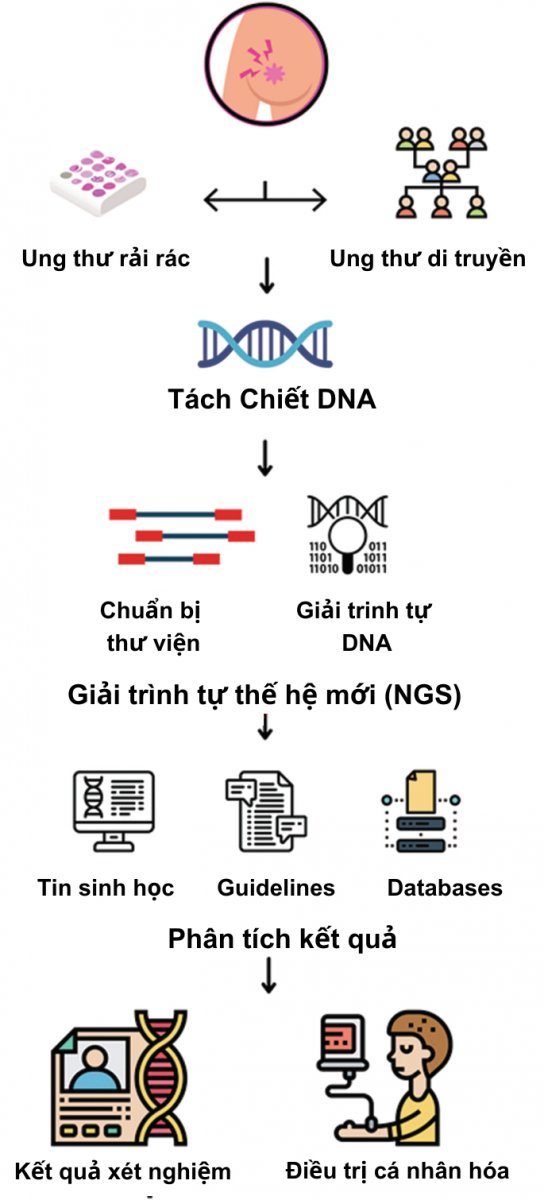
Figure 2: The NGS Testing Procedure for BRCA Mutation Detection
The Devyser BRCA NGS Kit - The Optimal Solution for BRCA Mutation Testing in Breast and Ovarian Cancer
The Devyser BRCA NGS kit is an advanced solution for BRCA mutation detection, exclusively distributed in Vietnam by MBS Biotechnology Co., Ltd. This product is specifically designed for next-generation sequencing (NGS), delivering high accuracy and a fast workflow.
Benefits of using the Devyser BRCA NGS kit:
- - Fast, streamlined workflow: The test is completed in 5 hours with only 45 minutes of hands-on time, and each sample uses a single reaction tube without having to be split into multiple separate reactions, enabling rapid results.
- - Comprehensive detection: Detects all mutations in the BRCA1 and BRCA2 genes, including both germline and somatic mutations.
- - Convenient and safe: The one-sample, one-tube workflow simplifies procedures and reduces the risk of cross-contamination.
Dedicated data analysis software: Devyser BRCA NGS is an end-to-end CE-IVDR solution with integrated data analysis software for fast and accurate result analysis, including CNV analysis linked to comprehensive genomic databases such as ClinVar and dbSNP.

Figure 3: Devyser BRCA NGS kit
Contact MBS Biotechnology Co., Ltd for detailed advice on the Devyser BRCA NGS kit.
Conclusion
Next-generation sequencing (NGS) has revolutionized the diagnosis and treatment of hereditary breast cancer. This technology not only enables early detection of BRCA mutations but also opens up many effective treatment opportunities through personalized treatment. The Devyser BRCA NGS kit supplied by MBS Biotechnology Co., Ltd is the optimal solution for laboratories, helping improve the quality of patient care.
References:
[1] https://yte.nghean.gov.vn/tin-chuyen-nganh/ai-nen-lam-xet-nghiem-dot-bien-gen-brca-de-xac-dinh-nguy-co-di-truyen-ung-thu-vu-631356
[2] https://hcmfosted.vn/khao-sat-dot-bien-gen-brca1-brca2-trong-ung-thu-buong-trung-bang-ky-thuat-ngs/
[3] https://tamanhhospital.vn/phau-thuat-phong-ngua-ung-thu-vu/
[5] Zeichner, S. B., Stanislaw, C. B., & Colleagues (2016). Ovarian cancer. Journal of Clinical Oncology, 34(6), 548-557
[6] Walsh, T., Nathanson, K. L., & Colleagues (2016). Genetic markers in breast cancer. New England Journal of Medicine, 375(12), 1145-1157.
[7] Roy, R., Chun, J., & Colleagues (2011). Hereditary breast and ovarian cancer syndrome (HBOC). Nature Reviews Cancer, 11(6), 438-448.
[8] Venkitaraman, A. R. (2009). BRCA1 and BRCA2 in cancer. Annual Review of Pathology: Mechanisms of Disease, 4, 461-487.
[9] Harbeck, N., & Gnant, M. (2016). Breast cancer. The Lancet, 389(10073), 1134-1150.
Related Articles

GENEQUALITY 2050 - A COMPREHENSIVE AUTOMATION SOLUTION FROM AB ANALITICA
The GeneQuality 2050 system - a comprehensive automation solution from AB Analitica, delivering outstanding performance in real-time PCR testing with speed, accuracy, and safety.

GENEQUALITY Whole Exome Sequencing (WES) | Viet Huy
GENEQUALITY Whole Exome Sequencing (WES) is a whole exome sequencing solution developed by AB ANALITICA and CE-IVD certified under EU Regulation 2017/746 (IVDR). This product complies...

Exploring Whole Exome Sequencing (WES) - 2024: A Breakthrough Technology in Rare Disease Diagnosis and Personalized Medicine
Discover an overview of Whole Exome Sequencing (WES), an advanced genetic sequencing technology applied in rare disease diagnosis, cancer research, and personalized medicine
Need Advice on the Right Testing Solution?
Viet Huy engineers are ready to help your laboratory choose the optimal technology.